
Category Archives: Short Stories English

When the Clouds Taste Like Cotton Candy (Previously Silence of the Cursed)

What happens when a six-year-old’s questions are too profound for anyone to answer, and his only hope of understanding is to meet God face-to-face?
A devastating narrative set in a small Swiss village about Åsa, a six-year-old boy cursed with extraordinary intelligence and synesthesia - he can see music as dancing colors and taste the hues of the sky. Unable to find answers to his profound existential questions and misunderstood by everyone around him, Åsa’s desperate quest to speak directly with God leads him down a tragic path.
Åsa was only six years old but very different from his age mates. He preferred his own company over that of his friends’. A conflict raged like a storm within him. Outside, he was all sunshine and flowers and butterflies, and inside, he was as dark as the heavy rain clouds.
Åsa was also highly intelligent but depressed. The bright flashes of intelligence lit the heavy clouds of depression at frequent intervals.
Åsa’s high intelligence led to an increased curiosity. He questioned everything and everybody and felt a unique and desperate need to understand the world surrounding him. The depression was the result of his inability to mix up and play with his age mates.
The depression also came in the form of frustration when his queries weren’t answered. Though his intelligence was welcomed by the adults around, his depression was not something they understood or accepted.
_______________________________________________________________________
There was yet another reason behind Åsa’s dark, grey depression, which he had never shared with anyone except his parents. The first time he mentioned it to Sara, his mother, it was a Sunday night.
‘Mother, do you know when Uncle Luca plays the great pipe organ, I can see the music?’ Åsa said to his mother, his voice barely above a whisper.
‘What nonsense, Åsa?’ Sara stopped brushing her hair and looked at her son in the mirror. ‘What do you mean, you can see the music?’
‘It is not nonsense. I can really see music.’ He tried to explain. ‘The notes all become colorful and vibrating shapeless blobs, and start dancing around my head.’
‘It is just your imagination, Åsa.’ Sara shrugged and started brushing her hair again.
‘No. It is not my imagination.’ The little boy tried to convince his mother. ‘I can really see music. What does it mean?’
‘How do I know? Only God knows what this means, Åsa!’ She patted his shoulder and went to the kitchen.
_______________________________________________________________________
Åsa went outside looking for his father. He found Gittan in the shed, milking the cows.
‘Father, I can see music.’ He hesitatingly announced to Gittan.
‘Huh?’ Gittan was startled. ‘What do you mean, you can see music?’
‘I mean, when I hear music, on the radio or in the church, I can see it.’ The boy tried to explain. ‘The sounds become colorful shapes, which dance around my head.’
‘Music is sound, my boy. You can hear the sound but cannot see it.’ Gittan chuckled. ‘I am sure someday, you are going to come up to me and tell me that you can hear sunlight.’
‘It is not funny, Father. I can really see music.’ Åsa’s eyes were glistening with a teary frustration. ‘Just tell me what it means.’
‘Only God knows what this means, Åsa. Only He, in his infinite wisdom, knows.’ He scooped up the little boy, wiped his tears with his thumbs, and sat him on his sturdy shoulders. ‘Let’s go inside. The dinner should be almost ready.’
_______________________________________________________________________
Gittan and Sara lived in a small village in Switzerland. Gittan ran a small dairy farm. The couple had three kids, two girls and a boy, and Åsa was the oldest.
They lived in a village called Brindelwald, which was located right next to a glacial gorge. It was a place straight out of fairy tales. Small cottages with coloured rooftops dotted the green slopes in summer. And in winters, a glimmering white blanket of snow covered everything. The snow cover got so deep that it became almost impossible to see the village from a distance. Only the grey-white smoke rising from the chimneys denied its existence to the weary travellers.
Åsa had always been a sweet child, full of curiosity and wonder. Where the two girls constantly fought and badgered their parents over dolls and toys, Åsa remained quiet and did not ask for anything. He just wanted answers to his seemingly simple questions.
‘Why is the sky blue? What lies beyond the mountains? Where do the butterflies go in winter? What is God, and how big is He? What is heaven, and what is hell? Why do little children die? Why do people fight wars?’ And the list went on and on.
Åsa asked his parents these questions, but they were unable to satisfy him.
_______________________________________________________________________
‘Åsa is not very normal, you know?’ The old doctor Gösta removed his thick glasses. He rubbed at them with his white handkerchief, examined them for spots, and looked up. He was a small and portly man who looked more like a friendly baker than a psychiatrist.
His sudden diagnosis made Gittan and Sara look at each other, confused.
‘Not normal? Not normal how?’ Gittan asked the old doctor with all the anxiousness of an overprotective father.
‘Yeah! Not normal how?’ Sara held Gittan’s hand for added strength, her anxious brow all pinched and creased.
Doctor Gösta pushed his chair back and got up. He walked to the open window of his small office. It was a dry winter morning, and the snow-covered Alps were sparkling in full glory. ‘What a wonderful day. I should be out walking. I shouldn’t be discussing complex psychological problems with worried parents.’ He thought tiredly and then turned to face the couple.
‘Please don’t take me wrong.’ Doctor Gösta scratched his nose, searching for appropriate words, ‘Åsa is a fine boy and he is growing up fine. But there is something wrong here.’ The old doctor tapped his temple with his right index finger.
‘Something wrong with his head?’ Sara’s crystal blue pupils dilated in alarm. ‘But he is just having bad dreams. More than other children of his age, but still….it is just nightmares. Surely, that doesn’t mean he is mad?’
Gittan did not say anything. He had the patience of an old tree, and he really wanted to understand what the old man was trying to say.
‘No! No! Not at all.’ Gösta smiled at Sara reassuringly, ‘Please do not think like that. Åsa is not mad, for sure. He is just confused.’
Gittan and Sara kept on watching the old Doctor silently.
‘You must understand, Åsa was not having nightmares. He just told you that because you both refused to understand or listen to him.’
‘Refused to listen to what?’ Gittan looked at Sara questioningly, but she was equally confused.
‘Did he tell you he was feeling cold inside?’ Doctor Gösta asked Sara. ‘Did he tell you he was feeling all empty inside?’
‘Yes, but…’ Sara was still confused. ‘It is cold. Winters are here. Everybody feels cold all the time, and emptiness? I fed him hot soup. He was alright.’
Gösta smiled at her kindly.
‘No! Åsa is experiencing a different kind of cold and emptiness. His cold originates from his head and seeps into his heart. Summers or winters do not matter at all. Similarly, there is a void inside him, which can’t be filled with food or love.’
‘Doctor Gösta, please! What is really wrong with our son?’ All this talk of inner cold and emptiness was beyond Gittan’s comprehension. He was a simple dairy farmer.
‘What is really wrong with Åsa is that he is depressed.’ The old doctor stated, while sighing with exasperation.
‘Nonsense!’ Sara suddenly stood up. ‘Little boys have no business getting depressed. Depression is for old people who have got nothing to look forward to.’ She looked fiercely at Gösta, ‘I am telling you, doctor, my son is not depressed.’
‘Sara, please!’ Gittan got hold of his wife’s wrist and pulled her down gently. ‘Let the good doctor explain what he is saying.’
‘Thank you Gittan!’ The old doctor looked at him with grateful eyes, ‘You both must understand that Åsa is a gifted child. He is highly intelligent, but his intelligence exceeds his limited understanding of things. This frustrates him, and the frustration manifests in headaches and depression.’
‘What should we do then?’ Gittan asked him desperately.
‘Just listen to what he says. Try to understand what he tells you. And also, try to answer his questions.’ Gösta sat down again behind his Oakwood desk. ‘It would be better if you take him to a good psychiatrist in Bern. I know one such person, an old colleague of mine and an expert at working with gifted children.’
_______________________________________________________________________
When his parents failed to satisfy his curiosity, Åsa started visiting the small library of the village school. In the beginning, it was fine. There were books filled with the most wonderful pictures and words. There were stories of dragons and fairies and giants. There were stories of the old gods and their terrible might. There were stories of the new God and his everlasting light. The books fascinated him and enriched his imagination.
Old Lena watched Åsa with wonder, love, and an ever-growing sadness. Round and stout, she was the old widow who looked after the village school. Always dressed in a light, cream-coloured and heavily knitted woollen shawl and a brown, gnarled walking stick in hand, she looked exactly like the fairy godmother. Her silver, white hair was always tied neatly in a bun, and her translucent blue eyes kept on smiling behind thick pebbled glasses.
Her husband had died a long time ago during the Great War, and she had no children of her own. But instead of bitterness, her heart was filled with love and affection. She loved all her students and protected them like a mother hen. She sought happiness within their eyes, sparkling with mischief. Their tinkling laughter filled the lonely halls of her life.
_______________________________________________________________________
Sara and Gittan left the Doctor’s office and started walking home. For some distance, neither of them spoke. Suddenly, Gittan felt something and looked sideways at Sara. Tears were streaming down her cheeks.
‘Hey! What’s the matter?’ Gittan asked her concernedly.
‘He is our only son, Gittan…..our only son!’ She looked at him pleadingly. ‘And he is going mad.’
‘Come on! He is not going mad. He is just too inquisitive.’ Gittan tried to brush aside her fears.
‘No! There is something seriously wrong with Åsa and I know it.’ She grasped his hand. ‘It is not only the questions and depression. Did he tell you he could see music?’
‘Yes, he told me that.’ He said thoughtfully. ‘Most probably, it is just his imagination.’
‘It is not his imagination, Gittan.’ Sara insisted. ‘I believe he is cursed.’
‘Cursed?’ Gittan nervously laughed. ‘For God’s sake, woman! He is not cursed. He just asks difficult questions and has a rich imagination.’
‘The devil puts those questions in his mouth, Gittan. It is the Devil. Åsa is cursed.’ Sara started weeping uncontrollably.
_______________________________________________________________________
Lina had a special place in her heart for Åsa. She appreciated his curiosity and understood his dilemma. She knew that he suffered greatly and chose to suffer along with him. To extend all possible help, she selected appropriate books for Åsa and marked the pages where she thought he could find the answers. She told him stories. She sang him songs. Her knowledge was quite limited - only mythology and religion. But still she did her best. She tried to answer all his questions.
‘I wish my husband were alive. He knew a lot of things.’ She used to tell Åsa.
‘Did he ask a lot of questions? Just like me?’ The little boy asked with wonder.
‘Yes, he did, at least when he was a child. But when he grew up, he used to provide answers to those who needed them.’ Lina smiled at some faraway and long-forgotten memory. ‘He used to tell your grandfather, the best way to get most of the milk was to be kind to the cows. He told the old baker the right temperature to bake the most delicious bread. He told Andre the ironsmith about the right tools to mould the metal.’
‘Did he know the answers to all the questions?’ Åsa asked.
‘No, he certainly did not. But I guess, now he has all the answers.’ Lina smiled at Åsa and ran her arthritic fingers through his blond hair.
‘How come he has all the answers now? Isn’t he dead?’ The boy wasn’t satisfied with the old woman’s answer.
‘He has all the answers because he is with God now.’ The old woman stared at her dead husband’s smiling photograph.
‘Does God have answers to all the questions?’ Åsa asked excitedly.
‘Yes, I guess He does.’ Lina looked up at the blue sky, and Åsa’s eyes followed her gaze.
‘Where does He live?’ He asked the old woman.
‘The God you mean?’ She looked at him and when he eagerly nodded, said, ‘He lives up in the sky, dear boy. Where else?’
_______________________________________________________________________
The next Sunday afternoon, Åsa packed some sandwiches and climbed the Faulhorn, the high mountain peak near his village. He climbed for hours and ultimately reached a large platform near the top. He looked down and saw his village, looking tiny and far off. He ate his sandwiches, drank a little cider, and tried to identify his home and that of Lina’s.
He looked around. The blue sky and the billowing white clouds seemed so near. Suddenly, he laughed. He laughed because he could taste the blue sky and the white clouds. Both tasted like cotton candy. Yes, he could taste colours - yet another one of his odd traits, he hadn’t told anyone about.
He got up and climbed some more. The sweat running down his back in torrents, and the soreness in his limbs, told him it was enough. He looked up and screamed at the top of his voice.
‘God!……Goooooooooooooood!!!!!’ But nobody answered.
‘Maybe God is asleep.’ Åsa thought.
‘God! Are you there, God?’ Still, no godly voice boomed from behind the clouds in reply.
After many more fruitless tries, Åsa got tired and went back home. He repeated his visits to the top of Faulhorn a few more times, but God never answered.
_______________________________________________________________________
When Åsa failed to talk to God on top of the Faulhorn, he went back to Lina. She was dusting the old books lining the shelves in the school library.
‘I think you are mistaken.’ He confidently informed the old woman.
‘Oh? Mistaken about what, child?’ She looked sweetly at the little boy’s innocent face.
‘God doesn’t live in the heavens. I climbed up the Faulhorn. I called Him, but He didn’t answer.’ Åsa sounded heartbroken.
‘We cannot talk to God that way.’ Lina said with a chuckle. ‘It is only when we die that we meet Him and His son. Only then, we can talk to Him all we want, and certainly not before that.’
‘But I want to talk to Him now. I want to ask Him many things.’ Åsa insisted.
‘I know that. But death is the barrier that separates Him from us.’ Lina understood his anguish.
‘There must be some other way. I really, really, need to meet Him.’ He was adamant.
‘I am sorry, Åsa. There is no way. God doesn’t speak to little boys or even old women, for that matter.’ She ruffled his hair lovingly. ‘But you may go down to the Church and ask Father Matteo. He is a man of God. If there is a way, I am sure he knows it.’
So Åsa ran down to the Church.
_______________________________________________________________________
Old Father Matteo was tending to the rose bushes in the churchyard.
‘Good morning, Father Matteo.’ Åsa greeted him breathlessly.
‘Good morning, Åsa.’ The priest shaded his eyes from the bright sun and peered at him. ‘I do hope everything is well with Gittan and Sara?’
‘Oh yes, Father, they are perfectly fine. I just came to ask you something very important.’ The boy asked him shyly.
‘Oh?’ Father Matteo smiled at him kindly. ‘Yes, please, what is it?’
‘How can you talk to God?’ Åsa chose his words carefully. After all, he was talking to a representative of God. ‘I mean, I need to ask God some important things. So how do I talk to Him?’
‘It is actually very easy. You just need to pray.’ The priest answered while wiping his sweaty forehead. ‘But what do you want to ask Him?’
‘Many things. Like, for example, why does He allow people to kill each other?’ The little boy started counting his questions on his fingers. ‘Why does He make some people very poor and the others very rich? Where do we come from when we are born? Where do we go when we die? What is heaven like?’
‘Hmm! These are very difficult questions, indeed.’ Father Matteo scratched his head. ‘Why don’t you read the Bible? It is through His book that he talks to us. Read His book and maybe you will find answers to your questions.’
‘But I want to talk to Him directly. His son talked to Him. Why can’t I?’ Åsa shifted on his feet impatiently.
‘I don’t know, Åsa.’ Matteo said sadly. ‘I only know that we cannot talk to Him directly and ask Him things. If we could, it would have made our lives a lot easier.’
‘Will I be able to talk to Him, once I die?’ Åsa asked him, thoughtfully.
‘Oh yes! You will be able to ask Him. But you are still young, my boy. You have a long life ahead of you. Don’t talk about dying. Dying is for old men like me.’ Father Matteo patted his shoulder and sent him on his way.
‘I must talk to Gittan and Sara about Åsa.’ The Priest thought as he saw Åsa vanishing in the distance.
_______________________________________________________________________
A full week later, Lina went to visit the Gittan family after school hours.
‘Where is Åsa today? Is he sick?’ She asked Sara after exchanging pleasantries.
‘What do you mean, Lina?’ Sara asked her alarmingly. ‘He was fine when I sent him to school this morning. A little bit quieter than usual but very much fine.’
‘He didn’t come to school today.’ Lina was alarmed, too.
The two women stood looking at each other for some time, and then Sara ran to the shed, shouting her husband’s name.
_______________________________________________________________________
Åsa stood at the edge of the gorge. He peered into its white, fathomless depths. He knew that only death awaited him at the bottom. But he was also convinced that with death would come all the answers. He looked at the vast blue sky and the white billowing clouds for the very last time, tasted their sugary texture, and then jumped.
All questions had fallen silent. Åsa was no more. The curse had lifted.
Tales of the Ancient Turtle: Who is God?
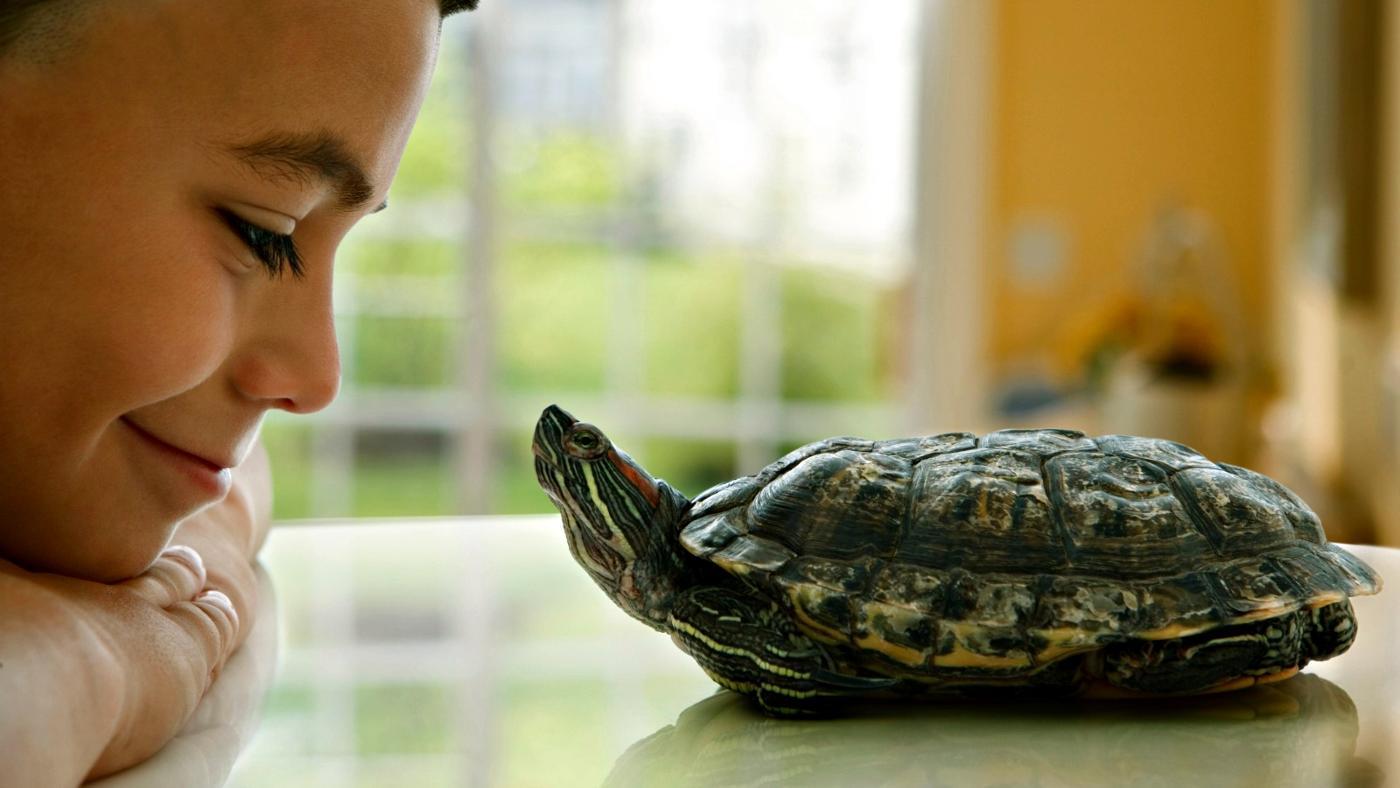
I was once friends with a very ancient turtle. I was very young, probably four or five and he lived in our backyard. The turtle talked to me. He told me many stories of times past and people long dead. He was wise, very wise and the mind of a four-year-old kid was no match to his wisdom. But he talked to me because he loved me. And he loved me because I could listen to him for long with my pupils enlarged in astonishment and my brow knitted in curiosity.
Read more: Tales of the Ancient Turtle: Who is God?
It was a quiet summer afternoon when we first met. My mother was fast asleep and I slipped out of her arms very quietly. I missed her warm sweet smell but outside, the adventures were waiting for me. Adventures have always waited for me.
It must have been a large house. But to me, it looked enormous. There were rain-forests hidden deep within the rose bushes and anacondas wriggled freely in the moist soil. My mother called them earthworms but I knew they were anacondas. There was a desert in one corner of the backyard – my very own Sahara. My mother thought it was just construction sand, which was left behind by the workers. Adults can be so wrong sometimes. To me, it was a desert, complete with dunes and when I planted some saplings, there was an oasis too.
I looked up and peeked at the golden sun from under the shadow of my palm. He was furious with the world but was smiling down at me. His golden rays kissed my cheeks and whispered in my ears:
‘Go ahead son. The adventure is waiting for you.’
‘But it is so hot and you are ferocious today.’ I replied while readjusting my palm.
‘Not for you. You are a dreamer. For you, I will always be kind.’ The sun crackled a deep-throated laughter.
Reassured, I started looking around for adventure.
Suddenly, a squirrel hiding in the mango tree caught my attention.
‘Come down little one. I want to play with your soft bushy tail.’ I called her down kindly.
‘Always be kind. Kindness goes a long way.’ My grandfather said to me often.
The squirrel came down. I called her Sweetie and we had always been on friendly terms. She shared her nuts with me and in return, I brushed her soft tail. It was softer than my father’s shaving brush and was of the most marvelous silver-grey color.
‘Hey, have you heard the news? The turtle has woken up.’ She sat on my shoulder and squeaked in my ear.
‘Huh? Turtle? Which turtle?’ I was surprised.
‘The turtle in the backyard silly’. Sweetie informed me while breaking a nut and offering one half to me.
‘There is a turtle in our backyard? Wow!’ It was marvelous news to me.
‘There has always been a turtle in the backyard. But he had been asleep for the last hundred years or so.’ She chattered on.
‘Go meet him. Pay your respects. He would certainly like that.’
So I ran to the backyard. There was no turtle anywhere.
‘Mr Turtle! Mr Turtle! Where are you?’ I hesitatingly called.
I could hear nothing in reply. All was silent and the brick floor was shimmering in bright sunlight.
‘Look closely son. He is having his siesta under the rose bushes.’ The sun whispered.
‘Where? I cannot see him.’ I desperately searched under the bushes.
The sun laughed quietly and shifted a little. The shadows changed and I started to see something which was never there before. There was a mottled hard and curved shell – dark green and grey. I poked at it with a small stick and it moved.
‘Who disturbs me?’ A strange low voice murmured.
‘I am sorry sir. I just wanted to meet you and say hi!’ I said very very respectfully. Turtles were serious business and I knew my manners.
‘Hmm! Once you grow old, you will realize something very important. Nothing in this life is more delicious than a siesta in summer.’ The turtle said in a tired voice, gradually opening up his small deep eyes and looking at me.
‘Ok. I am really sorry. You can go back to sleep. We will chat some other time.’ I tried to withdraw.
‘There is something else you will realize once you grow old. No time is better than now.’ He smiled at me kindly.
‘Sit down and let me have a close look at you.’
So I sat down under the rose bushes. It was pleasant there. The dark soil was wet and the anacondas were squirming happily. I prodded one with my finger. It was all moist and soft.
‘Now don’t do that. He doesn’t like that.’ The turtle admonished me silently. I withdrew my finger. But the turtle was wrong. The anaconda didn’t care.
‘What are you doing outside at this hour?’ The turtle asked me gently.
‘What is wrong with this hour? This is the hour of adventure.’ I was confused.
‘You should get out at another time. It is hot.’ He looked up at the bright sun.
‘No time is better than now.’ I repeated his words and the turtle laughed. It was a deep rattling sound, pleasant to hear. It was a warm laughter coming straight from his belly.
‘My mother is asleep and I am free. There are lions to hunt and desert gypsies to dance with.’ I said after politely waiting for his laughter to die down.
‘Aha!’ he grinned. ‘We have a dreamer here.’
‘Is it bad being a dreamer?’ I asked him. My grandfather always said it was better to act than dream.
‘Bad? Absolutely not. Being a dreamer is rather marvelous.’ The turtle winked at me: ‘It is the dreamers who change the world.’
‘Change the world? But how?’ I found his comment very strange.
‘Dreamers can see things that others can’t.
Dreamers can sense things that others can’t.
Dreamers can hear things that others can’t;
and dreamers can do things that others can’t.’
It was more of a song than a statement. I loved the songs. They were simple, yet meaningful.
‘Can dreamers see God?’ I asked him. It was a very important question as my father always said that God was invisible.
‘Oh yes! They can. You can.’ The turtle raised an eyebrow.
‘Nopes. I cannot see Him. Nobody can.’ I pursed my lips determinedly.
‘Hmm! What do you think God looks like?’ He asked a question I could answer easily.
‘He is big – bigger than everything. He must be a giant because He is all mighty and powerful. He moves His finger and the earth moves and the mountains crumble.’ I could go on and on but the strange expression in the turtle’s eyes halted me.
‘Now who told you that?’ He asked concernedly.
‘My teacher has told me that.’ I said while visualizing my teacher’s green eyes and golden hair which made a halo around her lovely oval face. She was probably my very first crush.
‘But she didn’t say what God looked like. I added the giant part myself.’I said proudly.
‘Of course you did because you are a dreamer.’ The turtle laughed again.
‘Can I feel your belly when you laugh?’ I asked the turtle hesitatingly. Touching somebody’s belly was not something I normally did. But I wanted to feel the warm vibrations.
‘Oh yes, you can my boy. You can do anything that makes you happy.’ He answered with a jolly laugh and I gently placed my palm against his belly. Those were good vibrations. They traveled up my arm and reached my heart. They tickled my heart and I laughed too.
‘God is somebody you can easily see and feel.’ The turtle finally said after finishing his long vibrating laughter.
‘How come?’ I was all ears.
‘How do you feel your mother? I mean what if she gets up when your eyes are closed? Can you feel her leaving?’
The turtle had asked a very strange question. I had never thought about it. So I closed my eyes and imagined myself lying in my mother’s embrace. And then the answer came to me, as clear as sunlight kissing a brilliant red rose.
‘I know. I know.’ I answered excitedly. ‘When she gets up and leaves, her warmth and fragrance leaves too.’
‘Exactly!’ The turtle nodded with satisfaction. ‘Now tell me, what makes your mother, your mother?’
He saw the confusion dancing in my eyes and so repeated his question.
‘What special quality makes her your mother?’
‘She gave birth to me. I came out of her tummy.’ I was wise way beyond my years.
‘Yes, true. That is basic. But what quality makes her your mother?’ He asked again. And I thought really hard this time.
‘I guess that would be her love. She loves me no matter what. She loves me even when I break a glass. Of course, she is unhappy for a while and frowns but she still loves me.’
‘Yes!’ the turtle sounded jubilant. ‘Her love makes her your mother. You see the love in her and sense it.’
‘So? What that’s got to do with God?’ I was a bit perplexed.
‘That’s got to do everything with God.’ He said in a matter-of-fact way.
‘He created you, me, your mother, and everything that exists around us. And He loves us all unconditionally.’
‘So my mother is God too?’ I thought I was finally drawing a connection.
‘Hmm! Let’s just say that God is greater than her and different from her.’ The turtle was alert now. He was very alert and was looking at me with eyes sparkling with ancient wisdom.
‘Different how?’ I was mentally ready to start a comparison.
‘Different because unlike your mother and mine, He runs through us and through everything around us. He makes you sense your mother’s warmth and He makes you smell her warm fragrance. He makes you move and He makes you stop. We are alive when He breathes inside us and we fall dead when He leaves us. He is the sun, the moon, and the stars and He is the rain forest, the desert, and the earthworms.’
‘Not earthworms. They are anacondas.’ I rudely interrupted him.
‘Yes, I am sorry. He is the Anacondas and not the earthworms.’ The turtle corrected himself with a kind and affectionate smile.
‘And most importantly, God makes you dream. He makes you dream so that you can see Him and sense Him in all His glory and warmth.’
‘Tipu? Tipu? Where are you?’ My mother’s voice echoed in the distance.
‘Oh shit! She is awake.’ I cursed and then suddenly stopped. Cursing was bad and it was especially bad in front of a grownup. You could get spanked for that.
‘No problem. You can always curse in front of me.’ The turtle winked at me knowingly.
‘Will I see you again?’ I asked while brushing off the seat of my shorts.
‘Oh yes. I will always be here. We will talk more and then some more. We will keep on talking till it is your time to move on.’ The turtle said while settling back down comfortably in the moist soil.
‘Hey there you are. How many times I have told you not to play outside at this hour?’ My mother asked with a frown.
I ran to her and hugged her legs. She smiled and hugged me back. We started walking towards the cool shade under the verandah. I looked back and waved at the turtle. I could not see him because the sun had shifted again. But I was sure he could see me.
‘Whom are you waving at?’ My mother looked back but couldn’t see anybody.
‘I made a new friend today. I was waving at him.’ I smiled at her.
‘A new friend? Who is he?’ She sounded a bit worried.
‘A turtle!’ I happily informed her.
‘A turtle?’ She looked surprised for a moment. But then she bent down and kissed my sweaty forehead. ‘You are a dreamer my son. You will always be a dreamer.’
She had seen the happiness in my eyes and she was happy that I was happy. I was happy because I was a dreamer and I could see God.
#English #fiction #story #turtle #dreaming #dreamer #world #adventure #God #mother #summers #imagination #philosophy #love #kindness
Loneliness of the Last Dragons

The old man’s dragon-shaped pipe held a secret about why diamonds only appear in frozen lava - a story about the two last dragons on earth.
A haunting mythological tale told by a mysterious old man smoking a dragon-shaped pipe, revealing the origin of diamonds in frozen lava. The story follows Agonious, a powerful but lonely dragon who discovers he’s not the last of his kind - somewhere across seven seas lives Miria, a golden dragoness equally isolated in her suffering.
‘God is sad, my son! And He has created a world in His very image. It is a sad, sad world.’ The old man said, while slowly opening his eyes. His blue-grey eyes looked at me with an amused curiosity.
‘And why is God sad?’ I had failed to grasp the image of a sad omnipotent being.
‘Why is God sad?’ The old man repeated my question, sounding perplexed.
‘Well, He is the only powerful being. The only one who deserves to be proud and arrogant. The only being which can create, and which can destroy.’ He answered slowly and deliberately.
‘Well, that should make Him happy. Don’t you agree?’ I questioned the blue-grey mist of his deep eyes.
‘Hmm! You are forgetting something, my son.’ The old man said with a smile. ‘God is lonely. Despite all the power and all the might, He is lonely. No one to talk to and no one to share his laughter with. His is the eternal loneliness and the never-ending sadness.’
When I remained quiet, he placed his hand on my shoulder and said, ‘Remember, son, the more powerful you grow, the lonelier you become. Loneliness is the price you pay for power.’
I saw the white smoke rings billowing out of the old man’s nose and mouth. They floated up and drifted outside the cave. Then they rose until they joined the white, billowing summer clouds scattered across the blue sky.
I looked at him closely. He had a head full of silvery hair, which fell in cascades over his bent shoulders. His complexion was fair, and a broad forehead topped a square and intricately lined face. The eyes were deep and rarely opened to their actual width. In fact, I always saw them as amused slits, bordered by an ever-spreading network of fine lines. An almost deformed, wide nose sat in the exact centre of the face and was underlined by heavy, sensual lips. He was a wise man indeed, but unlike all the wise men I had ever come across, he did not have a beard.
There were other odd dissimilarities, too. There was a silver earring dangling from one of his earlobes. He wore a velvety, maroon-colored robe, bedecked with golden dragons. The dragons were surrounded by forgotten scripts and ancient symbols, and yes, he smoked a most wonderful pipe.
The pipe, gripped in his yellowing teeth and dangling out of the corner of his mouth, fascinated me the most. It was most probably carved out of some ancient mahogany root and was lovingly polished and curiously shaped like a dragon. The dragon’s mouth opened up wide to form the bowl, while the tail ended up between the old man’s lips. The exquisitely designed and gold, metallic work defined the scales on the dragon’s body.
‘It was once called Agonious, the Fire-starter, the last of all the majestic dragons.’ The old man said, noticing my interest in his pipe.
‘I have never heard of him.’ I expressed my ignorance.
‘That is indeed understandable.’ He nodded his head. ‘But surely, you have heard of diamonds in the frozen lava pits?’
‘No.’ I again shook my head.
‘Do you know why diamonds are only found in the old and frozen lava pits?’ He asked again, refusing to get irritated with my ignorance.
‘No, I don’t. I never knew diamonds were only found in old and frozen lava pits.’ I answered while peering beyond the fragrant smoke, into his misty eyes.
‘Then let me tell you the story of Agonious and Miria. Agonious was a big and powerful dragon. He could throw fire over tens and hundreds of feet. When he flew, the earth darkened under the spread of his dark, majestic wings. He was so powerful that none of the dragon slayers could kill him. They came from all over the world, desperate to claim the head of Agonious. They fought well, but Agonious was too powerful and too big to be defeated by their inflated egos.’
‘Agonious could kill them from afar, but he knew the human thirst for self-respect. He gave them a good fight. He even tolerated a few sword wounds — mere pin pricks to him but enough to quench the blood lust of the dragon slayers. Agonious had a heart made of pure fire, but it was a magnanimous heart. He therefore never killed any of the dragon slayers and instead, let them leave in peace.’
The old man stopped to refill the pipe. He picked up an old leather pouch, embroidered with gold. Loosening the binding string, he started filling up his pipe one pinch at a time. I loved the smell of his tobacco. The warm fragrance turned the cave into a cocoon — a womb of safety. It took me back to times when I thought I was happy.
‘A magnanimous dragon that let his enemies leave in peace?’ I smiled at the old man. ‘I am a fan of dragon lore myself, but I have never come across the myth of a kind dragon.’
‘You haven’t? Eh?’ the old man chuckled softly, his tobacco ritual completed.
‘Agonious was really a kind dragon. He never hurt the villagers and, sometimes, brought them gifts of wild goats and fruit. He also helped them mow the hard land. He built dams for the poor and lit their fires on cold winter nights.
His kindness made him popular. Children called him Papa Agonious, and the villagers called him Agonious, the Kind. But despite all the popularity and love, Agonious was a very sad dragon. Can you guess why?’ The old man peered at me inquisitively.
‘Yes!’ By then, I had become quite familiar with the old man’s line of thought. ‘He was sad because he was lonely.’
‘Aha!’ The old man flashed a satisfied smile. ‘Exactly!’
‘Despite all his power and all his might, Agonious was lonely. He believed he was the last of his kind, swimming across the river of sadness, which we call life. Until one day, a sparrow told him of Miria. She was a beautiful golden dragoness, living across the seven seas. She had wings made of silver and had the most wonderful grey eyes. When she spat flames, they were the loveliest shade of emerald.’
‘But like Agoneous, Miria was sad too. She was sad because she thought she was the last of all dragons.’
‘Hearing of Miria, Agonious laughed and danced and wept with joy. He begged the sparrow to make haste, fly to Miria, and tell her of Agonious’ existence.’
‘Soon after the sparrow left, Agonious collected the most precious of gems and the most brilliant of diamonds in all the land. He begged leave of all the villagers and the children. They all cried and requested him not to leave. But loneliness is a more powerful drive than kindness. So one day, when all preparations were in place, Agonious spread his powerful wings and left for Miria’s land.’
With these words, the old man fell into a deep reverie.
‘The sparrow never reached Miria. Wasn’t it so?’ I asked the old man hesitatingly. I knew his stories always had a dark ending.
‘Yes,’ the old man slowly raised his head. ‘The sparrow couldn’t make it. She was killed by an arrow and was slowly roasted over a hunter’s fire. But Agonious did not know that and kept on flying east — towards Miria and a lifetime of happiness.’
‘The sun dipped beyond the horizon and rose again many times in a row. But Agonious did not stop. His large dark wings kept beating the wind hard.
The moon observed the flight of this dark knight on a love quest, and shone more brightly to facilitate his passage.
The eastern wind sensed the anxiousness of the Agonious’ lonely heart and changed its direction to give a boost to the flying dragon.
The ancient dragon spirits made the stars and the constellations twinkle more brightly to guide the weary dragon.
But Agonious was oblivious to all help. The load of diamonds he carried for Miria was heavy, but he just flew on and on towards his destiny.’
‘One day, when the morning sun rose, Agonious could see land in the far distance. His heart trembling with excitement, Agonious flew all over the land and looked for Miria. He searched in the mountain caves and he searched in the forest glens. He searched the blistering hot deserts, and he searched the snowy mountain peaks. But he couldn’t find Miria.’
‘Everywhere, people talked of a beautiful dragoness with silver wings. All the birds whispered of her mysterious beauty. But Agonious couldn’t find Miria, no matter how hard he tried.’ The old man fell quiet again and got up to prod the dying embers.
I looked out of the cave. The sun was going down. Suddenly, a shadow flitted across the pale sunlit sky.
‘Agoneous?’ I suddenly jerked my head and then smiled at my own stupidity. It was just a wandering cloud. The old man was weaving a wonderful tale, and I was beginning to fall under its spell.
‘What happened then? Where was Miria?’ I couldn’t stay quiet for long.
‘Hmm! Where was Miria? That is indeed an important question.’ The old man smiled at my impatience.
‘This is the question that the dragon asked everybody, but was unable to find the answer. But then one day, he came across a unicorn drinking from a crystal-clear stream. Now unicorns and dragons are close. They both share a common ancestry — the ancestry of myth and magic.’
‘O! the noblest of all creatures, please help me, for I am weary in my quest.’ Agonious begged the unicorn.
‘You are looking for Miria. Aren’t you?’ The unicorn slowly raised its graceful head and asked him.
‘Yes…yes….Miria. I am looking for Miria. I have flown for months to reach her, but now that I am here, she is nowhere to be found.’ Agonious answered while anxiously rubbing his veiny wings together.
The unicorn grew sad and bent its noble head in silence.
‘Why don’t you say something? Why don’t you tell me? Where is Miria?’ Agonious asked furiously.
‘Come, follow me.’ The unicorn guided Agonious towards a long, winding path climbing up the mountains. They climbed on for hours and finally reached the rim of a smoking volcano.
‘What is this? Where is Miria?’ Agonious looked around.
‘Miria is dead.’ The unicorn told him sadly. ‘She grew tired of her eternal loneliness. She was heartbroken. So one day she just flew up, kissed the clouds for the last time and then dived into this volcano.’
‘No!’ Agonious cried in anguish and disbelief. ‘But, I sent the sparrow to tell her I was coming.’ The unicorn just shook his head in sadness and walked away. Agonious kept on peering inside the volcano, looking for Miria. Then he flew up, kissed the clouds one last time, and dived into the volcano along with the treasure he carried for Miria. The lava burnt him to ashes in seconds and engulfed his treasure. Since that day, whenever the volcano gets frustrated and spews out lava and ash, it rains diamonds.’
Blood on the Persian Rug (Previously, Honor Cuts Both Ways)

They fled Taliban Afghanistan for American freedom, but extremism followed through their son, who murdered his sister for ‘honor’ until his other sister taught him that honor cuts both ways.
A devastating narrative set in California about an Afghan refugee family torn apart by conflicting concepts of honor.
__________________________________
Dawood’s home was a place of sorrow.
He was an old man, sitting on a couch in his living room. Deep lines of experience mapped his sun-beaten, brown, and haggard face. He had thick, grey hair cascading down on his shoulders, and his blue-grey eyes were clouded with age. But right then, his eyes could be seen brimming with confused tears, which were visible behind thick, pebbled glasses.
The room was wrapped in a thick blanket of dark gloom. The red and black, striped curtain covering the window, was drawn aside, letting some California sun in. But the dull rays of the early evening sun failed to lift off the gloom.
A few mediocre, monochrome photographs could be observed hung neatly on the pale walls. On closer scrutiny, most of the prints could be identified as from some mountainous Asian country, most probably the border regions of either Iran or Afghanistan.
Most of the photos showed tribesmen in baggy clothes, with automatic weapons held triumphantly across their chests, and heavy belts of ammunition hanging from their shoulders. Some stood in groups in front of burnt tanks, while the others stood either alone or in pairs. But the eyes of all subjects could be seen marked with a silently burning ferocity.
There were two floor lamps, one in each corner of the room. They were alight and throwing intersecting circles of light. The door to the small kitchen was half open, and the counter was visible. The ceiling fan was rotating slowly, throwing shadows across the ceiling.
A large LCD was nestled within the center of a large book cabinet. It was surrounded by thick, leather-bound volumes with their titles mostly in Persian or Arabic.
The floor was made of dark wood, polished and buffed to perfection, and a large, cream-colored, Persian rug marked its exact center. It was originally woven in beautiful, lustrous colors, but was now slowly darkening and caked with drying blood.
__________________________________
There were two bodies on the floor, of a young man and a woman. They were in their early and late twenties, respectively. The girl was sprawled on her right side with dirty blond hair covering her face. Her wound was not visible, but blood soaked the rug under her stomach. She was dressed in a half-cut, white tank top and faded blue jeans. There was a black high-heeled shoe on her right foot, while the left was bare.
The boy was dressed in dark trousers and a blue shirt and was lying face down. A white skull cap half-covered his head, and was partially dyed with blood. His shoulder-length dark brown hair was also drenched in blood, and a gaping wound was visible right above his neck.
__________________________________
Dawood turned his face and looked at Marjan. She was a beautiful and delicately built girl with dark eyes and dark hair, and was in her early twenties. Her face was passive, while she sat with her tightly clasped hands in her lap, and blankly stared at an invisible spot in the air. A blue-black and gleaming pistol could be seen nestled against her thigh. But she didn’t look like a murderer.
__________________________________
There was a small ornamental table placed alongside the sofa. It was dark mahogany in color with intricate golden patterns. Dawood absentmindedly toyed with the few small picture frames placed on the table. He picked one at random and looked at it closely. The complete family was there - happy and smiling. Dawood, Guljaan, Parizeh, and Salman, with a young Marjaan smiling in the middle.
Dawood delicately caressed the image of his long-dead wife with his thumb, trying to extract some warmth and reassurance. He looked at the frozen faces of Parizeh and Salman, both in their teens and standing on each side of their parents, their eyes filled with mischief and fun. Dawood looked at their bodies on the floor, lifeless and ugly in death. Parizeh seemed to be sleeping calmly with one hand folded under the cheek, and the other spread outwards. Salman had both his arms spread outwards like he was diving down from a great height.
__________________________________
Dawood picked up another frame and thought of a day in the distant past. It was Kabul, and the white pomegranate flowers were in full bloom. He was dressed in black and looked handsome in an embroidered black cap. Guljaan looked like a princess in a flowing, white dress. They were happy to be in love and lived in a small cottage on a hillock, on the outskirts of Kabul. Kabul was just a ghost of its former grandeur, but still beautiful after the Russians had left. Life seemed like a never-ending fairy story.
Soon after marriage, the young couple was gifted with children each year. First, Salman was born, and then Parizeh. Dawood and Guljaan looked at the two smiling angels and thanked God. Their lives were perfect.
Then their small piece of heaven turned into hell, and the pomegranate flowers went red with blood. The Taliban rose to power in Afghanistan, and all hell broke loose.
__________________________________
Dawood was a prime target for the Taliban because of his moderate and liberal views. He did not want religion to further complicate the lives of the poor Afghans. He just wanted love, understanding, and tolerance. When the Taliban destroyed the Buddha statues in Bamiyan, Dawood vented his anger in full force. It was the wrong move, and the Taliban acted swiftly. With ten, publicly delivered lashes, Dawood went one step closer to realization.
The second blow came when the Taliban caught Guljaan walking in the bazaar without pardah. She also received ten lashes in the city square.
Dawood and Guljaan purchased truth at the price of twenty lashes. The truth was that Afghanistan was no more a place to live. It had turned into hell, and especially Kabul had truly become the city of Kane. The Taliban had brought religion and expelled God.
It took the last of Dawood’s considerable savings to get him and Guljaan out of the war-torn Afghanistan. They reached a refugee camp in Pakistan, and then Dawood used his contacts to immigrate to the USA - the land of dreams and opportunities, and a land far away from extremism and intolerance. It was a land where they could finally be free of oppression and the enforcement of a violent brand of their once peaceful religion.
__________________________________
Dawood looked down at Salman’s body. He thought it strange how his son grew up to be his exact opposite. He was a decent kid and a teenager - a lively boy with a healthy interest in girls and sports. But then he fell under the spell of Laiba, a Moroccan girl with extremist beliefs.
Dawood always knew that Laiba was not the kind who married men and made their lives happier. Laiba was deranged and psychologically unstable. She had love in her heart, no doubt, but that love was for a God, terrible in His fury and anger. Laiba was not a lover. She was a recruiter, and she recruited Salman.
When Salman joined forces with religion, he lost his happiness and interest in all worldly things and activities. The country that had given him freedom and refuge and opportunities, became to him the country of heathens.
Salman became everything Dawood had ever stood against. When Laiba finally left for Afghanistan, Salman wanted to follow. It took the last ounces of strength in Guljaan to stop him. She was already sick - cancer was wreaking havoc through her body. Seeing his mother in pain, Salman did not leave.
__________________________________
Parizeh was the exact opposite of Salman. She was shy and reserved as a child. But she grew into a fierce and independent girl. She had no interest in religion, and specifically its extremist version. She laughed at Salman when he grew a beard and laughed even more when he chose to wear a white skull cap at all times.
She deliberately brought her male friends home just to infuriate her brother. There were embarrassing incidents. Salman could not control his anger. It was a matter of male Muslim honor for him. He fought Parizeh every step of the way. Their relationship was characterized by black seething hatred.
Personality-wise, Marjaan was a moderate and reasonable girl. She was independent like Parizeh, but lacked her abnormal interest in sensual pleasure. She had an interest in religion like Salman, but lacked his passion for extremism. She believed in a religion of peace, love, and understanding. She viewed religion as an individual choice and not as an instrument of subjugation. Her approach brought her closer to Dawood. She was his prized child.
__________________________________
Then one day Guljaan died - a silent end to her long suffering. Cancer took her away. But Dawood knew it was not cancer. It was her constant longing for the white pomegranate flowers and home, which finally killed her.
Following her death, the household disintegrated. Guljaan was the force holding the fabric of sanity together. She exercised a moderating influence upon both Salman and Parizeh and was the bonding agent between the two formidable forces. When she died, the bonding force departed with her. Dawood could only sit and watch while the world that he loved disintegrated into chaos and hatred.
__________________________________
Dawood again looked at Marjaan. She had come a long way and was no longer the smiling child in the picture. She had grown into a young woman, and her cold, impassive face did not betray the calamity of the moment. It was the day when Dawood’s family ended up being a family.
Dawood looked at Marjaan and then at the two dead bodies, trying to make sense of what had happened. He remembered Salman coming home in a fury and confronting Parizeh.
‘You are a complete disgrace to this family. You have brought shame upon us.’ Salman shouted at Parizeh.
‘What have I done now?’ She asked indifferently, while calmly polishing her nails.
‘You……you have done this.’ Salman said and threw a magazine in front of her.
Parizeh glanced at the magazine out of the corner of her eyes but said nothing, choosing to focus again on her nails.
‘What’s the matter? Why are you fighting with Parizeh?’ Dawood opened up his eyes slowly and asked.
‘Just look at this, father.’ Salman picked up the magazine and shoved it in Dawood’s hands. ‘Rather don’t look at it. You can’t. Parizeh is all naked in there.’
‘I am not naked. I am wearing a swimming costume.’ Parizeh explained and laughed.
‘You look like a shameless whore.’ Salman shouted at her hoarsely. ‘May God’s curse be upon you.’
‘God’s curse be upon you.’ Parizeh mimicked her brother. ‘I don’t care about your God and his curses.’
Salman stood silently, raging for a moment, and then just left the room. Dawood closed his eyes again, praying that the matter ended right there and then. But only a few moments had passed when Parizeh’s screams jolted his eyes open. She was lying on the carpet, screaming with pain, and Salman stood over her with a cutting knife dripping with blood.
‘Oh God! What have you done? Dawood asked and tried to get up, but he could not. He watched helplessly while Parizeh breathed her last.
‘I have done what you should have done a long time ago.’ Salman shouted and seemed almost possessed by his inner demons. ‘She was a threat to this family’s honor. She was a threat to our religion’s honor, and she was a threat to my honor. Today I have removed this threat forever.’
Dawood saw Marjaan, silently approaching Salman with Dawood’s gleaming Colt in her hand. But before he could warn Salman, Marjaan raised the pistol and shot Salman in the neck, point-blank.
‘What have you done, Marjaan? He was your brother.’ Dawood stood up slowly. ‘Salman was mad. He had misconceived notions of his male and religious honor. But why did you kill him, child?’
‘I killed him for honor, too, Father.’ Marjaan said and slowly sat down on the sofa, and placed the pistol in her lap.
‘Honor? Whose honor?’ Dawood thought he had misheard her.
‘My own honor, Father. My honor, being a woman.’
 Shehryar khawar