
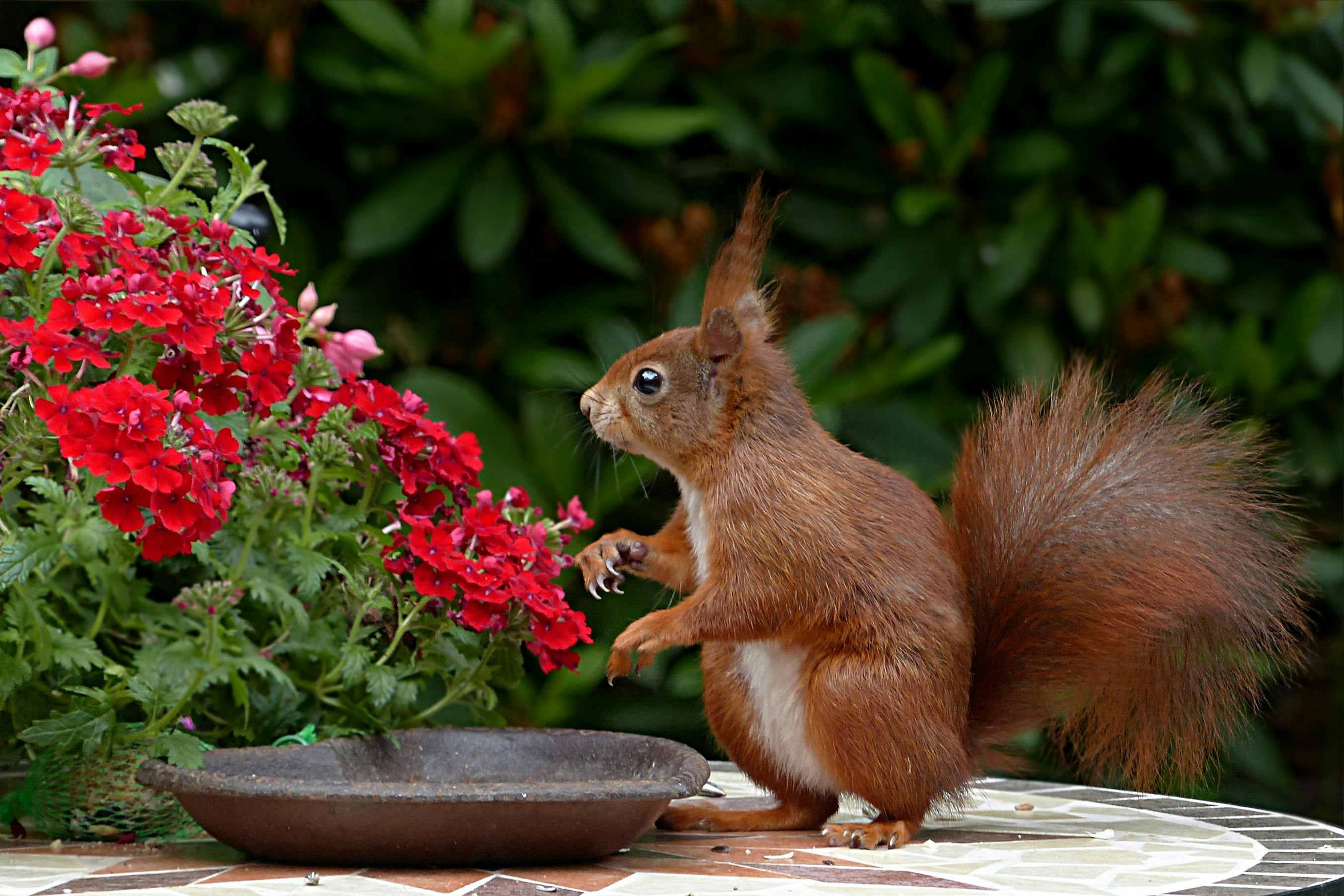
Once upon a time, in a jungle far, far away, lived a tiny squirrel named Katto. She was a beautiful squirrel with a silver coat of fur, a long, graceful and bushy tail, and to top it all, a charming, toothy smile. God had blessed Katto with a heart as lovely as her looks. It was large enough to shame even the heart of an African elephant.
But like all really beautiful things and beings in this world, Katto’s beauty was not perfect. A great flaw marked it as she was totally blind. A great misfortune indeed, but it made no difference to her. She was one happy squirrel, though unaware of her own beauty and charm. Katto lived within a comfy old crack in the trunk of the tallest Oak. This crack had always been her home. There was a bed made of the softest moss and ample storage space for the winter nuts.
To Katto, her life was awesome as she had a good shelter and the nuts were abundant. Moreover, being a good and kind soul, she was always ready to help other creatures in tough times, and she was always willing to lend a sympathetic ear. Naturally, this made her very popular in the jungle.
Rabbits came jumping to ask where they could find the sweetest carrots. Birds landed on the Oak’s branches to discuss their domestic troubles and get counselling. Bats visited her home to get beauty tips, and elephants came for anger management sessions. Even the mighty lion sometimes stopped under the oak and roared a loud greeting, ‘Roaaaaaar!!!!! What’s up, my little Katto?’ She always bowed and replied courteously, ‘Everything is honky dory, your majesty’.
But popularity is not a blessing. It is a curse. Seeing Katto so happy and being so likable, the other squirrels became madly jealous.
‘Who does she think she is - Queen of the jungle?’ They all thought so in unison, and jealousy filled their tiny hearts with an evil green poison.

The other squirrels started hating Katto. They despised her beauty and her kind and sweet nature. But their hatred in no way ever stopped them from exploiting Katto.
They drank her ginger beer and ate her nuts, while making evil faces, oblivious to their poor, blind hostess. They passed evil comments, but Katto’s heart was too innocent to sense the jabs of sarcasm, dipped in hatred. To her, the world was an eternal playground and her friends were the perfect playmates.
Failing to hurt Katto, the squirrels started poisoning her ears.
In the beginning, they just said, ‘Katto, you are such a good soul. It’s a pity that you are not good-looking. Rather, you sure are ugly. How can you live with a face like this?’ She just smiled back and said, ‘Looks are not important, one just needs a good heart to go on.’
When the repeated attempts to make Katto realize that she was ugly, failed, the squirrels changed their approach.
‘Katto, we understand that you believe you are all kind and good. But you need to look deep within yourself. Beneath all this soft kindness, a venomous selfishness breathes. You do good not because you are genuinely good. You do good only to feel all superior. In reality, your heart is bitter and selfish.’
At first, Katto tried to ignore these hateful comments. But with the passage of time, and like constantly falling drops of water, the ugly comments wounded her soft and delicate heart. The poison worked its dark magic and corrupted her confidence in her own goodness.
The poison didn’t kill Katto. Instead, it made her deeply unhappy. She started avoiding the company of other animals and ignoring their pleas for help. She tried to be alone as much as possible and wept tears of misery and complained to God.
‘Why have you made me so ugly and my heart so selfish?’
But God kept quiet. Apparently, He did not give a damn about a tiny squirrel’s emotional dilemma. When God did not reply, Katto grew lonely….very lonely. A time came when her loneliness completely isolated her from her friends. Her delicate heart tried its very best to sustain. But finally it could no longer fight bitterness and cruelty, and lost its softness and warmth.

Loneliness itself is quite terrible for the soul. But do you know what really kills the soul? It is self-pity that butchers the soul. It slithers in slowly like a venomous snake. It wraps itself around lonely hearts and starts feeding on all the misery. Slowly and gradually, we get addicted to her bitter-sweet consolation. This addiction kills the soul.
As expected, an addiction to self-pity finally killed Kattos’s sweet soul. Her beauty transformed into harsh lines of sadness. Her kindness turned into a wretched disregard for others’ miseries and troubles.
The squirrels had already abandoned her. Her other friends tried their best to make her see the truth. But she shunned everyone and locked herself into a rigid and cold carapace. She thought her loneliness would give her solace, but it embittered her even more. As time passed, her tears dried up into tracks of dried salt on her lovely cheeks and finally faded away. As time passed, the world forgot Katto and her once lovely presence.

But thankfully, Katto’s story didn’t end, as one day something extraordinary happened. A wild pigeon was shot by a hunter’s arrow. Wounded and howling in pain, he flew around and looked for refuge. He saw the Oak and threw himself at the mercy of the thick blanket of leaves.
Katto heard his tortured cries for help. At first, she deliberately muffled her ears, but then she could no longer control herself. Carefully approaching the wounded pigeon, she felt his gaping wound with her small hands. Though devoid of sight, Katto could still feel the pain of the wounded pigeon. So she dragged him into her home. She cleaned and dressed his wounds. She comforted him during dark, silent nights and sang him songs when it rained. Her dedicated attention worked miracles, and gradually, the pigeon grew better. But still, he was too weak to fly away.

The pigeon was a lonely being himself. He was intelligent and sensitive, and his grey coat of feathers made him quite charming. Though Katto, being blind, could not see this charm, the pigeon’s eyesight was fine. He saw Katto’s beauty and charm and felt drawn to the sadness residing deep within her heart. As the days passed and the sun completed its countless journeys across the blue skies, the pigeon gradually fell in love with Katto.
Love can blossom into a flower if reciprocated. But in the absence of reciprocation, love becomes a terrible torture for a sensitive soul.
One day, when Katto was changing his dressings, the pigeon gathered courage. He softly placed his wing on Katto’s head and lovingly caressed her fur. But instead of smiling in return, which the poor pigeon expected and hoped for, Katto got infuriated. ‘How dare you repay my kindness with such a vile gesture?’ she fumed.
‘Vile?’ the pigeon fumbled with the words, ‘No, it is not vile. I think I love you Katto.’
‘What? Love me?’ Katto laughed bitterly. ‘Can’t you see I am ugly? Can’t you feel the hardness and selfishness of my ice-cold heart? How can you love such a miserable and pathetic creature?’
The pigeon was both confused and shocked. ‘Katto, you are beautiful beyond words, and you have a heart so soft and delicate. How can you say such dreadful things about yourself?’ He desperately pleaded, ‘Please allow me to love you and let me tell you the truth.’ But Katto was too convinced of her ugliness. ‘Liar!’ she shouted and brutally kicked the pigeon out of her home. The poor, heartbroken pigeon tried to flap his wounded wings but failed and fell on the forest floor. His wings fluttered once, twice, and then his heart stopped beating.
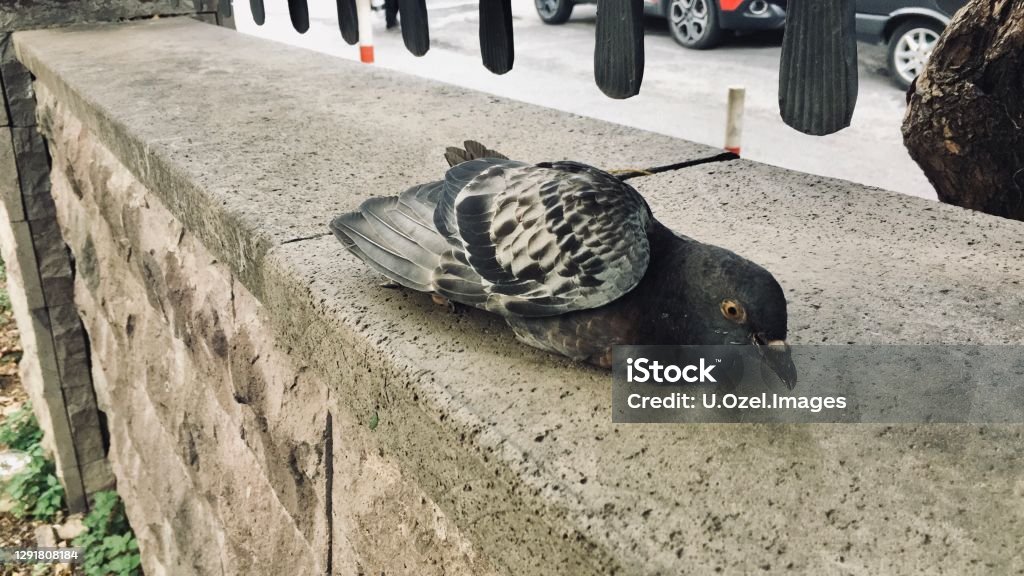
The jungle grew real quiet - shocked at the violent end of a beautiful and loving heart. But life goes on. In a few hours, the scavengers ate up the pigeon’s carcass.
Katto was lonely again, and her loneliness made the other squirrels very happy. They ran down the Oak’s trunk in glee and approached the pigeon’s remains. They prodded the bloodied mess of grey feathers and finally found the pigeon’s eyes, which were somehow still intact.
‘Let’s take the dead pigeon’s eyes to Katto. It would surely make her more miserable.’
The squirrels, feeling all excited, climbed up the trunk to Katto’s home.
‘Hey, look! What your poor lover has left you,’ the squirrels announced. Katto felt the small, round, and smooth objects with her tiny claws. ‘What are these?’
‘These are your poor lover’s eyes. He has left them for you.’
Leaving Katto alone with her misery and the pigeon’s eyes, the squirrels ran away.
‘He left his eyes for me?’ Katto was puzzled. Then she hesitatingly slipped the dead pigeon’s eyes into her own empty sockets. Magic happened, and the eyes came alive. Trying to come to terms with the unexpected blessing of sight, Katto came out of her hole.
She hurriedly climbed down and peered into a small puddle of rainwater. A beautiful squirrel was peering back at her shyly.
‘Is it really me? I can’t believe it.’
Katto looked around and saw the deep green forest and the clear blue sky. She saw the silver clouds kissing the Oak’s branches and the bees hovering over the vibrant and colorful flowers.
‘Yes, I am beautiful and my world is beautiful.’
Then she looked around and saw the blood-stained feathers of the dead pigeon.
‘Oh, what have I done?’ She cried, ‘He really loved me and I killed him’.
Hearing this confession, two warm tears slipped out of the dead pigeon’s eyes. They fell onto Katto’s heart and dissolved her self-pity forever. Up in the heavens, God smiled his tired, sad smile.
 Shehryar khawar
Dear Sir or Madam:
Brilliant Warm Regards, please
|Dr. Ali Baig| |Lahore, Pakistan| | Cell # +923214548929|
LikeLiked by 1 person
Lol….my dear Doctor sb. We are connected on LinkedIn. Why a doubt regarding my gender?
Thank you for the kind compliment
LikeLike