
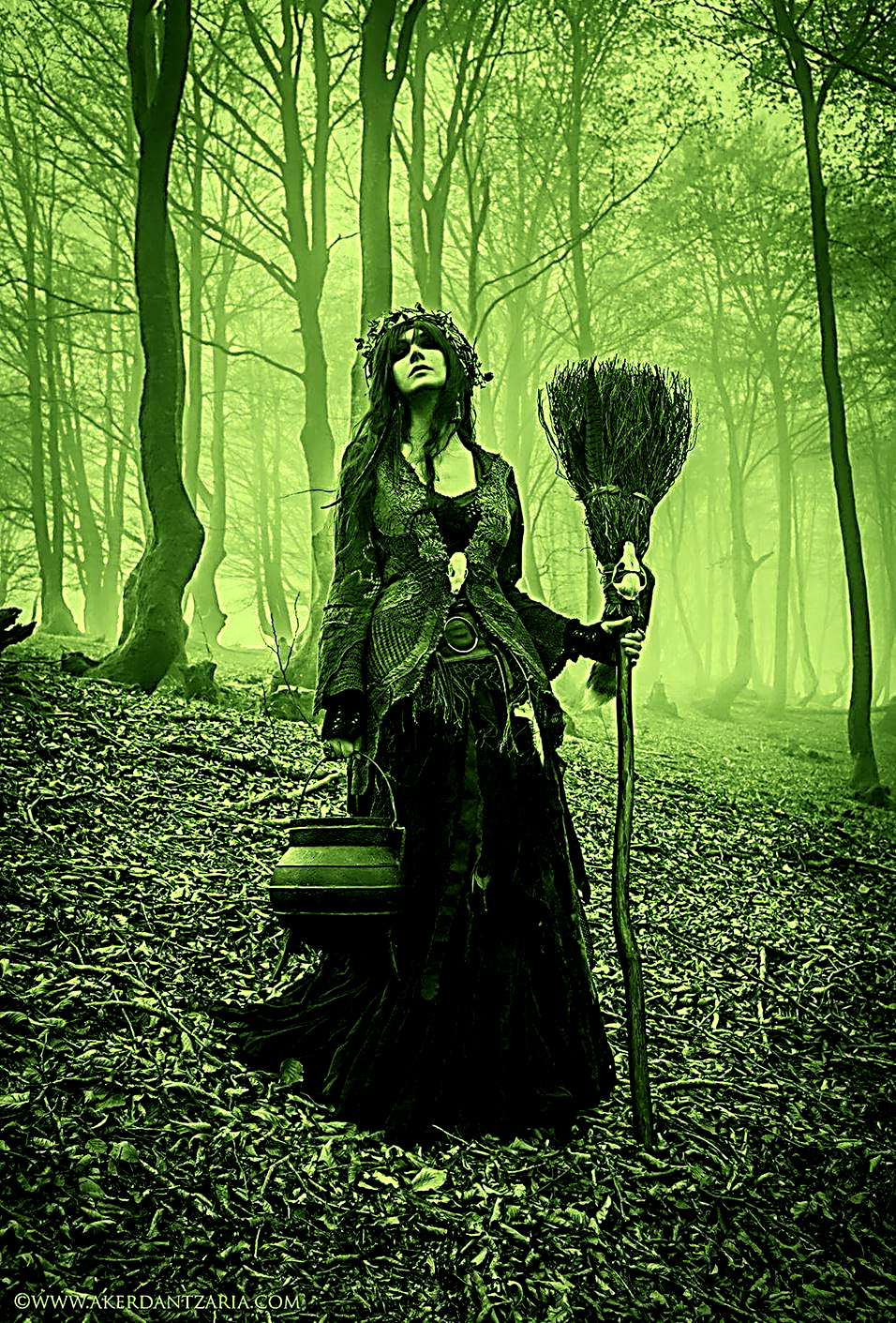
Tales of the Ancient Turtle – The Witch of Ghoragali

Picture1

The Witch offered him the gift of understanding all living things - but warned that it came with the darkest curse: the sadness that follows those who truly see and feel everything.

A haunting narrative about a thirteen-year-old boy’s encounter with the Mother, an ancient, beautiful witch living in the pine forests of Ghoragali in the Himalayas. Guided by a mysterious dog named Shaggy and the cryptic Keeper of Secrets, the protagonist discovers a primordial force who reveals herself as Gaia, Terra, the source of all life, who remembers when God was female and witches were healers, not evil.

___________________________________________________

‘Why is it…’, I asked the Turtle, ‘….that the more I understand life and the more I write, the more I grow sad? I don’t dislike being sad, but it overburdens me sometimes.’

‘Hmm!’ the Turtle closed his grey, clouded eyes for a moment. When he opened them again, they were, as usual, shining with the golden light of ancient wisdom. ‘Understanding is a gift, child. This gift comes to a few, but this gift always comes with a curse. And that’s what the Witch told you. That was the deal you made with her.’

‘The Witch?’ I was surprised. ‘What witch and what deal?’

‘The Witch whom you met when you were a little boy.’ The Turtle reminded me with a smile.

‘I don’t remember any such witch. And anyway, there are no real witches, and I am too old to believe in myth and magic, and make any deals with make-believe entities.’ I stood up suddenly. My own anger surprised me.

‘Tsk, tsk!’ The Turtle was unaffected by my annoyed reaction. He was always as cool as a cucumber, and his skin was as smooth as it was thick. My emotions and feelings slid over it like water slides over round, smooth stones.

‘There once was a witch, and you met her and she gave you a gift - the Witch of Ghoragali.’

I kept quiet. Of course, I remembered the Witch. I thought I had forgotten her musky presence, but no. She had always occupied a very spacious chamber in my memory palace.

___________________________________________________

It was the summer of 1986, and I was on a scouting trip to Ghoragali. It was a hill station in the Himalayas. I was about thirteen, and the trip was not an adventure, but an escape. People often believe that the lives of children are easy and trouble-free. But certain childhoods are complex and difficult, and come with their very own brands of trouble. To me, discipline has always been synonymous with torture. The trip was, therefore, my way out of the dungeon of discipline.

___________________________________________________

I discovered something wonderful during that particular trip by virtue of my love for nature. The discovery was that nature was there to listen to and to talk to, provided one had patience.

I looked at the grand majestic mountains surrounding the campsite. They first awed me and then talked to me as a friend, telling me stories of the days gone by and the people who lived in the caves, free of any complex or material desires.

I loved the graceful and slender pine trees with their fragrant needles and cones. The wind through the trees gradually became secret whispers, narrating accounts of clandestine trysts and stolen kisses, as the dry leaves fell all around the obscured lovers.

The place was full of waterfalls and fresh water springs. They all sang songs of longing and desire, their sweet melodies reaching crescendos with the wild rains.

And when I looked up, I saw clouds - great silver and grey, billowing giants. They bowed down to murmur in my ears of their silent, majestic journeys over the parched lands, their murmurs gradually transforming into echoing thunder.

I cultivated a deep bond of friendship with nature that summer. This bond is still going strong, and our communication is becoming more meaningful with each passing day.

___________________________________________________

To me, scouting lessons were boring - mindless hours spent earning badges for apparently useless skills, like, for instance, knots. Then there were group activities, which I hated with a vengeance. I didn’t crave anyone’s company but my own and wanted to converse with nobody but myself.

I wanted to know what I thought, and I wanted to know what and how I felt. That required solitude. It is when all is silent around you that you learn to listen to your own heart and soul. The other boys bored me. I failed to understand their mindless and constant obsession with their video games and toys.

It became far easier to get rid of my age mates and miss the boring scouting classes once I learnt that feigning sickness could work magic. A short complaint of a stomachache and a grimace were enough to convince everyone around me that a day off from classes was the only solution. 

When the other boys left, that was when I sat up and looked around for hours on end. In particular, I stared for long at a lonesome mountain track, disappearing amongst the swirling fog and tall pine trees.

I had noticed the path as soon as I had arrived at the camp. It looked like a part of an untold fairy story - a path to the mysteries. I never saw anyone treading that path, but I felt that it beckoned me in a very strange way. I was somehow drawn to it. I wanted to be the first one in my camp to explore that path and therefore, discussed it with no one. Well, no one but the old cleaner.

___________________________________________________

The old man was responsible for cleaning the camp. He was as silent as an old oak tree, but a subtle smile always kept dancing on his dry lips. It was like he knew the answer to some great riddle.

Sometimes, one could see him sitting high up on a ledge overlooking the camp. From a distance, I could hear his chanting and see his shaggy head moving to and fro like he was in a trance. The other boys pointed at him behind his back and made signs to show that something was seriously wrong with his head. But to me, despite his apparent craziness, he looked like someone who could know something about the path.

The old man knew I liked him and was curious about him. I knew this because his subtle smile acquired an added shade of warmth, and his eyes glowed when he looked at me. One day, armed with the confidence of this small piece of knowledge, I decided to approach him while he was busy cleaning the camp.

‘Hey!’ I greeted him, but he did not look back and kept on sweeping with his broom. So I cleared my throat and tried it again a bit loudly, ‘HEY!’

Unfortunately, my attempt to be louder turned out to be a half-scream, and the old man almost threw down his broom and jumped up with fright. He looked back as if expecting a ghost in the otherwise silent camp. But he smiled when he saw me.

‘Hey, little one!’ His voice was rough, as if he rubbed his throat with sandpaper each morning.

I looked at him closely. He was dressed in an old and tattered, grey, long shirt, and also what was definitely a pair of blue denim jeans, in their good old days. His deep, grey eyes peered at me from beneath bushy eyebrows, and they were as penetrating as icicles. He had great big silver whiskers and a long shaggy beard of the same color. The hair had turned yellow just around his mouth, probably due to smoking. And around his neck, he wore a most splendid necklace of pine cones.

‘What are you doing here alone in the camp? Don’t you have classes to attend, child?’ He smiled and asked me kindly.

‘Well yeah…’ I scratched my head and thought for a moment. ‘But I am sick.’

‘You don’t look sick to me at all.’ He observed with a chuckle.

‘I am not sick in the normal way. I am just sick of the other people around me.’ I don’t know what came over me, and I confided in him, somehow having a belief that he would keep my secret safe.

‘Hmm!’ He peered closely at my face, and his penetrating gaze made me feel slightly uncomfortable. But then he probably found what he was looking for because he suddenly looked away with a smile.

He picked up his broom and then, taking its support with one hand, started searching the pockets of his woolen shirt. My heart skipped a beat. 

In the stories I used to read, whenever old men searched their pockets, they always took out the most marvelous gifts for their young disciples. But to my utter disappointment, what he took out was only a misshapen and filter-less cigarette.

‘What’s your name, old man?’ I asked him, while hiding my disappointment.

‘Hmm!’ he grunted and tried to light the cigarette with a burning match. He cupped his hands and the flame from the match and the red glow of the burning cigarette, reflected in his grey eyes for a brief moment. ‘I go by many names, but you can call me the Keeper.’

‘The Keeper?’ I was surprised. ‘The Keeper of what exactly?’

‘The Keeper of Secrets, of course - all the secrets of this world.’ He said and took a deep drag, and the bitter smoke floated up to join the clouds.

I shook my head. His answers were too cryptic for my young age.

‘And what about this necklace?’ I pointed at his neck. ‘Where did you get it?’

‘This…’ he caressed the cones lovingly. ‘The Mother gave it to me.’

‘Is she alive…your mother?’ I expected his answer to be ‘no’ and was ready to come out with the appropriate condolences.

‘Not my mother, little one…’ he laughed. ‘The Mother!’

‘The Mother?’ I almost chewed my question.

‘Yes, the Mother. The Mother of us all. The Mother of the mountains and the Mother of the springs that sprout from beneath the rocks. The Mother of the clouds and the Mother of the trees receiving the rain.’

‘And where does she live?’ I was beginning to have serious apprehensions about his sanity.

‘There…’ the old man pointed towards the path. ‘She lives at a special place somewhere along that path.’

‘Let’s go, let’s go meet her then.’ I tried taking a step in the direction of the path, but the old man firmly grabbed my shoulder.

‘No, we don’t just go and meet her. We only go when she calls for us. And you will know if and when she calls for you. Wait for that time.’

___________________________________________________

In my opinion, the meeting with the old man was almost fruitless. He was crazy and his head was full of strange dreams. But so was I and my own head. The path still beckoned me, and it was my firm decision to tread that path at least once during that trip.

The opportunity came knocking at my door, only a few days later. The instructors got bored with teaching us knots and ordered an unsupervised field trip. I heard the two phrases: ‘no supervision’ and ‘field trip,’ and I knew my prayers had been answered.

I waited patiently while the other boys formed small groups and went in search of secret spots and snacks. Then I filled my water bottle and started walking towards the path.

It was a beautiful day. The sun was playing a constant game of hide and seek with the black and silver clouds. But as soon as I started walking, the clouds thundered angrily, and it started raining. God swirled His big paintbrush, and the sky and the mountains merged and faded into each other.

Though my clothes were soon soaked, rain did not worry me. It blanketed every sound and hid me from the world. Rain was my friend, and I welcomed its arrival with open arms.

But while crossing the campsite, a commotion drew my attention.

___________________________________________________

‘It was the Dog, wasn’t it?’ I asked the Turtle. ‘It was the Dog who took me to the Witch.’

‘I don’t think so at all.’ He replied while shaking his mottled, grey head. ‘I think it was your kindness to the Dog, which took you to the Witch. Rather, I believe that the Dog was your test. You passed the test with flying colors, and the Witch called you.’

‘Oh yes, I agree.’ I smiled and thought of the Dog fondly.

___________________________________________________

Right at the fringes of our camp, a small group of boys from some other school was standing. They were screaming and shouting with delight and throwing rocks at something. I approached them, and the object of their delight turned out to be a poor dog.

He was a great big dog - all wet, shaggy, and soiled hair, and bleeding from one leg. He was desperately trying to escape the boys, but they were not letting him. Each time he tried to run away, he was met with a heavy rock. The poor creature was miserable, and the boys were cruel beyond words. Their cruelty filled my heart with dark anger.

‘Hey!’ I shouted at them, oblivious of all consequences. ‘What do you think you are doing? Leave the poor creature alone.’

‘Who do you think you are?’ The gang leader asked me with his fists firmly placed at his waist.

‘I am just someone who wants you to stop throwing rocks at the dog. He will die for God’s sake.’ I could feel tears welling up in my throat.

‘And how will you stop us?’ The boy asked with a very cruel smile dancing on his thin lips.

‘He will not stop you, I will.’ A rough voice snarled from my rear. I looked back and there stood the Keeper of Secrets, holding his broom as menacingly as if it were a sword. ‘Now run along, or I will complain to your teachers.’

The boys took one look at the Keeper and his formidable broom and ran away. The poor dog, finally free of his tormentors, sat down and started licking his wound.

‘Come, child, the poor old Shaggy needs us.’ The Keeper patted my shoulder, but I stood rooted to the spot.

‘What?’ His grey eyes silently questioned me.

‘I am…I am afraid of dogs.’ I confessed sheepishly.

‘What? You are afraid of the old Shaggy?’ He laughed aloud but then saw my red face, and his laughter transformed into a kind smile.

‘Let me tell you a great trick, child.’ He placed his hand on my shoulder. ‘Whenever you want to help someone but are afraid of their reaction, always let kindness take over. Kindness almost always conquers fear.’

I looked up at his reassuring smile and decided to try the trick. We approached the dog, who was watching me guardedly. I sat down on my haunches and hesitantly extended my hand. The dog gave it a quick lick. Soon, his bushy tail started wagging, and he let me caress his forehead.

With the help of the Keeper and water from my bottle, I washed its wound. It wasn’t deep, and the bleeding had already stopped. So I took out my handkerchief and tied it firmly over the wound.

After a while, the dog got up and again licked my hand. Then he turned and started walking towards the path. I watched him limp away silently. Right where the path started and beside a big rock, he stopped and looked back at me. He seemed to be waiting for some response from me. I waved at him, but he kept on looking back at me.

‘Go on, he wants you to follow him.’ The Keeper said while gently nudging me.

‘Follow him?’ I asked confusedly. ‘But you said I can’t go tread the path until the Mother calls me.’

‘Old Shaggy is one of the Mother’s many companions. If he wants you to follow him, it is at the Mother’s behest. Now go before the Mother changes her mind.’

___________________________________________________

Old Shaggy started walking on the path, and I started following him. After every few steps, he turned and looked at me as if to make sure I was following him. Each time, on seeing me close behind, he wagged his tail and started walking again.

It was a strange but peaceful walk. The path was as beautiful as I had imagined it to be. It wound along seven great mountains. The locals called them the Seven Sisters. Though they looked similar, each sister had her own unique beauty.

The air was filled with the smell of wet pine trees. I believe this is how curiosity smells - the smell of wet pine trees.

A thick carpet of pine needles muffled my footsteps. Due to rain, the path was occasionally crisscrossed by tiny rivulets and streams. But the dog knew where he was going. He always chose the safest of all routes.

But then, when I turned a corner, I could not see the dog anymore. He had vanished without any warning or sound.

___________________________________________________

‘It was indeed a strange day.’ I muttered to myself.

‘Let’s just say it was indeed a great day. Not many people have a chance to meet the Mother.’ The Turtle said and slowly stepped into the warm sunlight. ‘And even those few who ever happen to meet her, not all are given the gift.’

‘Why do you think she chose me?’ I sat beside the Turtle and started scratching his mottled back. He loved it.

‘Well, she is the Mother. Who knows how her liking or disliking works?’ The Turtle answered.

‘By the way…’ I suddenly stopped scratching him. ‘How do you know about the Witch? I don’t think I ever told you about her.’

The Turtle chose to remain quiet. His eyes were closed, but I could see a faint hint of a knowing smile.

___________________________________________________

‘Hey!’ I looked around and called, ‘Shaggy?’

There was no barking response. There was only silence. I decided to wait and sat on a stone ledge. The mountain forest was gently whispering around me. The moist smell of the pines was growing stronger by the minute.

Suddenly, great swirls of fog rolled down the gentle mountain slope and engulfed me. The fog was so thick I could not see the pine needles at my feet. It was like I was sitting alone in a pine forest, up above the clouds. But strangely, there was no fear. There was only peace.

‘Welcome, child!’ A lovely voice called, and I jumped to my feet and looked back.

There she stood - the Mother. She didn’t look like any mother I had ever seen. Rather, she looked more like an elder sister.

She was tall and young - very young and very beautiful. Beautiful, auburn hair filled her head, which was crowned by a lovely and simple tiara, made out of odd twigs and wild flowers. Beneath a fair brow and two lush eyebrows, a pair of dark brown eyes was looking at me with kindness and warmth.

She was wearing a forest-green woolen shirt with a long-sleeved jacket of the same color, while her long skirt was brown like the soil. And yes, she wore a necklace of pine cones around her lovely neck, just like the one worn by the Keeper. Beside her stood Shaggy, his tail wagging happily.

‘Who are you?’ I managed to blurt out.

Hearing my question, she laughed, and her laughter was as warm and kind as her eyes.

‘I am the Witch of the forest, for I know all the secrets, and how the magic works. I am the Mother for I made all the secrets, and I made all the magic.’

‘But witches are evil, and you look anything but evil.’ I was perplexed.

‘Oh, not at all, child. Witches were my first true descendants. They are the worshippers of nature, and not evil. Evil resided in the hearts of men who couldn’t respect a woman’s ability to reproduce and be one with nature.’ She corrected me in a sing-song voice.

‘And what is your name?’ I didn’t realize at the time, but I had already fallen in love for the first time in my life.

‘I carry many names, as everyone sees me in a different light.’ She replied while raising her lovely arms above her head, and the fog seemed to shift at her command. ‘The Greeks called me Gaia, for they saw me as the primordial life force and the ancestral source of all life. The Romans called me Terra, for I sprang from the earth, and I am a part of it. People weaved stories about me, and they enveloped me in myth. People wrote songs about me, and they shrouded me in magic.’

‘Myth and magic?’ I scratched my head and asked, ‘But what are you truly?’

‘Ah, truth, the most challenging of all perceptions.’ She sighed. ‘Come walk with me.’

She held my hand in her own and started walking. She was warm,  as warm as the sun that comes out after a long and freezing winter night. Her warmth ran down my hand and touched my heart. I felt there was a light glowing in my heart. And she smelled wonderful. She smelt of all the wonderful things in the world.

She smelt of a mother’s lap, and warm milk and honey. She smelt of the rain and the clouds, and the black wet soil giving birth to life. She smelt of the wild flowers, green grass, and moss. She smelt of musk, and the desire that springs forth. And she smelt of the burning fire, and the glowing comfort that it provides.

We walked, and the shifting fog made me feel as if we were walking on the clouds. The rain had long stopped, but the drops falling from the trees played their own symphony of silence.

‘I was the first one on earth, and I will be the last. I gave birth to everything, and everything comes back to me.’ Her beautiful voice softly broke the silence. ‘I am the life force and I reside in everything. I even reside in you, child. I was the voice behind the Oracle at Delphi, and I am the end of all quests.’

‘You don’t look that old.’ It was hard for me to believe that she was as ancient as she claimed.

‘I am not part of the flow of time, child.’ She smiled and said, ‘Instead, time flows from the tips of my fingers.’

‘Are you…?’ I stopped and looked up at her kind face. ‘Are you God?’

‘Oh no, child. Not at all.’ She seemed surprised. ‘I am only a small part of God, as you are a small part of me. I am part of Her system.’

‘Her?’ I was flabbergasted. ‘I thought God was a Him.’

‘Is that so?’ Her eyes sparkled mockingly. ‘Anyway, let’s go inside before you catch a cold.’

___________________________________________________

‘Who was she truly?’ I asked the Turtle.

‘She was as she told you herself. She was and she is the Mother. And She is a part of all of us - you, me, the trees and the mountains, and even the oceans and the rivers. But don’t listen to me. I am just an old turtle.’ My old friend was always ready with strange answers.

‘She was…’ I said while thinking of that strange summer afternoon far away in my past. ‘She was strange, that’s for sure. And a voice in my heart confirmed whatever she said. But was that the truth?’

‘Remember what she told you?’ The Turtle looked up at me and asked. ‘She told you that truth is the most challenging of all perceptions.’

‘Yes.’ I nodded. ‘And that was strange. Truth is not a perception, but a statement of facts.’

‘No, child!’ The Turtle corrected me. ‘Truth is our own individual perspective on life. It is when we treat truth as a statement of facts that we commit the gravest of all follies, for it makes us judge others. The only fact is that truth is never objective but only subjective.’

___________________________________________________

I looked up and there was a most marvelous wooden hut, right in the middle of the pine forest. It was just like the fairy stories, small with a high and sloping roof, and grey smoke rising from a small chimney. If any doubts remained in my mind about her being a witch, they vanished at that particular moment.

She took me inside, and the inside was as wonderful as the outside. There was a bright fire burning under a steaming cauldron, and the smell of broth made my stomach growl with hunger. She made me sit on a small wooden stool right next to the fire, and then inspected Shaggy’s leg very carefully.

‘Ah!’ She exhaled a satisfied sigh. ‘You did a wonderful job, child. With kindness in your heart, you are a born healer. Never forget that.’

I blushed and started looking around to hide my uneasy and shy happiness. But that compliment was magical. I believe that even if, at that moment, I was cruel, that compliment transformed my true nature, and I became kind. Words of those whom we love carry a strange power of transformation.

Overcoming my embarrassment, I looked around and was fascinated by what I saw.

The walls were covered with strange roots and aromatic herbs, while all sorts of strange-looking devices and instruments lay placed on small, wooden stools. I thought I could identify a few.

There was a silver, sand-filled hourglass, but the trickle of sand was frozen mid-air.

There was a golden globe with indigo oceans, slowly rotating on a small and delicate silver pivot.

There were gleaming sextants and a Mariner’s Compass, and there were crystals of all sizes and hues, each pulsating with hidden lights.

‘Have some.’ I looked up and there she was, standing close to me, holding a bowl of steaming broth with a small wooden spoon. ‘It will warm you up.’

‘You were telling me about God being not a Him, but a Her.’ I asked her amidst hungry gulps.

‘Oh yes.’ She turned, and at a subtle gesture of her hand, the flames sprang up and the fire started burning more brightly.

‘Tell me, child…’ She asked while facing me again. ‘What does God do that others cannot?’

‘He…’ I looked up at her and thought hard. ‘He can create life.’

‘Very good.’ She smiled. ‘And who creates life? A man or a woman?’

‘A woman.’ I had understood her point.

‘In the beginning of time, everyone acknowledged God as a female entity. God was a Goddess.’ She said with her eyes shining with happiness at my answer. ‘Women were not viewed as objects back then. Instead, they were revered and respected as life-creating entities. The ancient women were healers as they understood nature intimately.’ She closed her eyes for a moment and grew quiet.

‘Then what happened?’ I asked impatiently. ‘What changed?’

‘Then…’ She opened her eyes, and they were moist with tears. ‘Then man looked at himself and perceived his own physical superiority over women. He looked at his own muscles and anatomy and refused to revere and respect a physically inferior female. Patriarchy was the evil that corrupted the soul of man. He first tried to dominate her by sheer will and force. But when he failed, he looked for other ways. He devised religion and its complicated rituals and invented a cruel God, who only worked in his favor. Religion taught him to brand the healers as witches and burn them at the stake.’

‘Hmm!’ I was too young to understand how patriarchy worked. ‘You also told me that you are the life force and you reside in every living thing?’

‘No, I reside in everything - living or non-living, as you see things. But everything is alive, the mountains and the rivers and the trees and the stones. Everything sees and everything feels. But only those who truly understand life and nature can feel that.’ She said while placing her warm hand on my shoulder.

‘And how do you understand and feel all these things?’ I asked while inhaling her musky fragrance.

‘Kindness is the key to the door of understanding.’ She bent her head and peered deep into my eyes. ‘Kindness makes you sensitive and kindness makes you feel.’

‘I want to understand and I want to be kind.’ I whispered back with a dry throat. Her nearness was overwhelming my senses.

‘So be it.’ She said softly and bent her head as if she wanted to kiss my forehead. But then she suddenly stopped. ‘I can give you the gift of kindness, but remember, child, this gift comes with a dark curse.’

‘Curse?’ I was curious, but for that one kiss of hers, I was ready to accept a host of all the curses in the world.

‘Yes, a curse.’ She smiled sadly, and her dark brown eyes suddenly filled with tears. ‘Sadness is the darkest of all curses, and it always comes along with kindness and understanding. So think very carefully before you accept this gift of mine.’

‘I am ready to accept your gift and the curse that comes along with it.’ I bravely declared and almost got lost in her lovely, moist eyes.

‘So be it.’ She whispered again and kissed my forehead. Two warm tears slid down her cheeks and fell onto my lips.

She removed her own necklace of pine cones and put it around my neck. She kissed my eyes one by one and peered into them again. I saw a strange light burning in the depths of her eyes. I looked closely, and the light was alive with images. I tried to focus and found myself becoming a part of those strange images.

I saw myself running after butterflies, and I saw those butterflies embracing the rose thorns. Their delicate hearts were instantly pierced, and purple blood flowed out and stained the rose petals.

I saw myself standing on top of a hill, while death and chaos reigned all around me. Armed men were fighting each other in the name of land and religion. Gradually, their victorious cries changed into cries of pain and misery, and their blood stained the soil.

And I saw myself loving with innocence and purity, my eyes alight with feelings. But then I saw my innocence being conquered by desire, and I saw myself losing the ability to love purely.

I saw all and I wept hard, tears streaming down my cheeks. I wept until darkness took me over and I was lost in nothingness.

___________________________________________________

When I opened my eyes again, I saw the worried faces of all my friends surrounding me. I looked around. I was back at the camp and was lying on my own bed.

‘What happened?’ I asked while trying to sit up.

‘Please don’t get up.’ A friend of mine said in a kind voice. ‘You are running a high fever.’

‘But how did I reach back? How am I here?’ I asked him.

‘The old cleaner found you lying unconscious in the forest. He brought you here.’ He replied.

‘Oh!’ I couldn’t speak anymore. Fever made my whole body ache.

‘What is this around your neck?’ My friend asked.

I opened my eyes and saw that he was fiddling with a necklace of pine cones around my neck.

‘This…’ My eyes filled with tears at the memory of the Mother. ‘This is a gift.’

___________________________________________________

‘Maybe it was all a dream and my feverish imagination.’ I said to no one in particular, and the Turtle chuckled with amusement.

‘Yes, maybe the necklace was put around your neck by the Keeper. Maybe he wanted to gift it to you.’ He was scuttling back into the shade.

‘No.’ I said after thinking hard. ‘I saw the Keeper again the day we were leaving the camp. He was wearing his own necklace.’

‘Maybe he made another, eh?’ The Turtle was still smiling.

‘Maybe.’ I nodded and stood up to leave.

‘So what is the truth?’ He looked up at me. ‘Did you or did you not meet the Mother?’

‘The fact is that I did not. And the truth is that I did.’

We kept on looking into each other’s eyes for a second or two, and then we both laughed.

— So my friends, what is the truth? Did I or did I not meet the Witch of Ghoragali? That is not for you to decide or judge, for that is my truth and mine alone. But you are welcome to go to Ghoragali and try your own luck. Maybe you are fortunate enough to meet Her. But if you do, and by any chance She offers you a gift, think very hard before accepting it because dark curses are hard to carry.

The Woman in the Porcelain Mask

Once I was Ashastû – son of Darsha and a resident of the ancient city of Nishapur. Once I was a bird, imprisoned by a gilded cage. I was the follower of Mazdayasna and the worshipper of Ahura Mazda.

Like a butterfly, which once was a caterpillar, I was all that but no more. Now, I have become the bearer of the most ancient of all the legacies – the legacy of forgotten wisdom. This is the story of my transformation and my transition, from a caterpillar to a butterfly; and from the path of dark ignorance to the path of bright wisdom.


Read more: The Woman in the Porcelain Mask

My family had been serving the grand temple of Nishapur since the times of the great Zarathustra. My father was amongst the most respected leaders of the Council of Mobeds. He was also the Chief Priest of the Temple of Fire and the Custodian of the Towers of Silence. 

My father was kind and affectionate and wanted me to take his place one day, once it was his time to return to the lap of Ahura Mazda. But I was a free spirit – an eagle living under the shades of the great grey mountains. An eagle, who was waiting for his chance to ride the mighty shoulders of wind; and make his nest atop the summits of the snowy peaks. 


Nishapur was not an ordinary city. This Persian city was the capital of the Province of Khorasan and attracted intellectuals and artisans from as far as Jerusalem and Taxila. The city was filled with gold and riches, thanks to the never-ending turquoise mines. 

It was a tough and resilient city. It survived the raids of the rebels fighting the Sasanids and the Samanids. It survived the onslaught of the Tahirid and the Seljuq forces, and it also survived the devastation imposed by the Mongols. In fact, the city’s survival against the Mongols was nothing short of a miracle.

The devils from the Khanate in Mongolia slaughtered the entire population of the city within days. A few citizens including my family, saved their lives by hiding in caves, masked by the slopes of the Binalud Mountains. But something deep within the city’s carcass kept breathing; and after the fall of Khwarezmia at the hands of the Mongols, Nishapur kept on thriving under the Shiites. Along with the great cities of Balkh, Merv and Herat, it evolved into an intellectual, commercial and cultural gem. 


Nishapur was a colourful city with a life of its own. But, with all its charms and knowledge and with all its riches and women, the city was unable to keep me chained to the feet of my father. I was waiting for my chance to fly away and my father knew this.

‘Ashastû! My son! You are going to get lost in the world out there.’ He used to say, gracefully attired in his flowing white robes. 

‘Yes, father!’ I used to bow my head with a tiny and rebellious smile dancing around the corners of my lips.

‘Stay here with me and one day the spirits of our ancestors will bring peace to you.’

‘But the spirits live beyond the frontiers of space and time. Won’t they be able to bring peace to me wherever I am in this whole wide world?’ I used to tease him, feeling confident in the warmth of his paternal affection.

‘Do not exploit the love of an old man, Ashastû. I love you my son and would like you to stay here with me till the day I breathe my last.’ His moist eyes used to plead.

‘If you truly love me, Father….’ I used to beg in return, ‘…..you would let me go wherever I want to go.’


Then one day, a great caravan from Kashghar crawled like a great serpent through the grand city entrance. To the city of Nishapur and its countless dwellers, the caravan was nothing out of the ordinary. But for me, the caravan was the wind, the eagle within me was seeking. Once it left Nishapur a few days later, I was riding one of the camels, concealed by the grey and brown of an old tattered robe.

Once I left Nishhapur, I never looked back. It was my dream to see the world stretching beyond the horizon imposed by the mighty mountains. That world I saw with my eyes and felt with my heart. With each new journey, came a new adventure. 

I carried along a copy of the Avesta, the collection of the Zoroastrian’s sacred texts. The ancient book, the obscure prophecies hidden within its disintegrating pages and my understanding of the verses, were all I had to earn my livelihood. I was willing to trade my religion for my survival.  

The caravan followed the southern shores of the Caspian Sea and entered Azerbaijan. I smelt the salt-laden air kissed by the snow and peered into the grey eyes of the wild mountain women. I found the majesty of the icy peaks reflected in those eyes. The freedom of my soul fell in love with the freedom in those grey eyes. But I had to move on and I moved on, leaving a piece of my heart buried in the white snow.

The caravan moved through Armenia and then Georgia and reached the great city of Smyrna in Turkey. The captivating architecture and the minarets with their high spires lost within the white billowing clouds, stimulated my curiosity. The music of lyre and the smells of spices intoxicated my soul and incited my sensuality. I wanted to study the graceful curves of each marble dome and feel the textures of each sun-dried brick. But I had to move on and I moved on, leaving a piece of my soul tied to the pigeons of Smyrna.

The caravan moved through Babylon and Mesopotamia and then back into Persia. It crawled along the Persian Gulf and re-entered Khorasan. The caravan did not stop either at Kandahar or Ghazni except for a day or two, and kept moving until it reached the feet of the great Buddhas of Bamiyan.

Bamiyan awed me. The Buddhas, managing to look humble even in their silent grandeur, captivated my imagination. There they were, carved into the side of a great mountain, looking down on the wandering Hazara tribes. I used to sit on a rock facing the statues and think of Budhha – the Prince who abandoned the rich comforts of his palace in search of peace and wisdom.

I loved Bamiyan so much that when the caravan left, I stayed behind. But it was not my interest or curiosity in the Buddhas which made me stay in Bamiyan. Rather it was my dark fate, which perched upon a lonely ledge of the naked mountains; and stalked its ignorant prey. Then one day it dived down from the ledge. It hid her dark ugliness behind the sweet and lovely face of Zahran and introduced me to the yet alien feeling of love.


One summer morning in Bamiyan, I was sitting at my usual spot and was lost in a reverie. The day was bright and peaceful with a few soft clouds floating on the clear blue sky.

‘Who are you and why do you sit here every day?’ The gleaming steel of a delicate but firm voice neatly sliced the silence.

I slowly turned my neck and looked at my nemesis. There she was, riding the most beautiful horse I had ever seen. It was tall and had gleaming black satin skin stretched over wonderfully formed muscles. Its long mane was knit into braids, each tied with a small silver bell at the end, and the leather saddle and straps looked as soft as velvet and were dyed a dark hue of purple.

My gaze remained fixed on the delicately carved silver spurs attached to the black leather saddles for a moment and then climbed up slowly. My eyes traced the firm contours of muscled and well-toned shins and thighs. The rider had an excellent taste in clothes and her dark velvet apparel spoke of her high status.

My gaze finally reached the face where a pair of emerald eyes were staring at me with curiosity. Two bushy eyebrows stretched like scimitars over those lovely eyes. Nothing else was visible as a purple silk scarf covered her face.

‘I am Ashastû of Nishapur.’ I answered while getting up. ‘And who might be you my lady?’

‘I am Zahran.’ She briefly answered and kept staring at me.

‘Zahran who? Queen of the Dark Night or Guardian of the Golden Sunlight?’ I asked with a smile.

‘Zahran, the daughter and only child of Katib Ahang – the Chief of all Hazara tribes.’ She answered haughtily and then turned her horse and galloped away.


I kept on standing there for ages, my senses numbed by the fragrance diffusing the clear mountain air all around me. It was the fragrance of the night-scented jasmine and it seeped deep into my heart.

Zahran, who she might have been and what she might have been, became my destiny in a few fleeting moments. I forgot that I was a traveller. I forgot that I was away from my home and in a foreign land of strange customs and traditions. All instincts of safety and survival abandoned me and were replaced by the vision of two emerald eyes, peering at me from behind a silk scarf.

Of course, I had heard of her father, Katib Ahang – the cruel and despotic tribal chief of all Hazaras. Whoever spoke of him, spoke with a fear-inspired deference. I knew where he lived. It was a navy blue pavilion, the colour of the night sky, on which a silver flag waved at the mercy of the crisp mountain air.

From that day onwards, I sat in the same spot every day and at all hours, waiting for Zahran to return. I forgot all about the grand Buddhas and I stopped revelling in the sad majesty of the lofty mountains. Zahran became the centre of my universe. Her memory became the fire around which my mind circled like a moth. I breathed in her name and breathed it out. I was a man struck by the thunderbolt of love. I was a doomed man.

Days changed into nights and nights transformed back into days. The sun and the moon followed each other from horizon to horizon. Then one day, while I was sitting at my usual spot, something cold and wet fell on my head. I looked up. Snow had started falling. Winter had come to Bamiyan and with it came a freezing wind, chilling my bones. Zahran didn’t come but I kept on waiting for her.

It was an extremely cold morning when the gods chose to smile down at me. There was a harsh wind blowing from the North. But I was oblivious to all. I was sitting cross-legged, facing the Buddhas with my eyes closed and vision filled with the beauty of emerald eyes. Suddenly I heard the sound of hooves thudding upon the soft carpet of snow.

When I heard the tinkling of silver bells along with the sound of hooves, my heart leapt with joy. But I didn’t get up. Ashastû of Nishapur was in love but he was also patient.

‘Who are you and why do you sit here every day?’ Her voice still sounded the same – gleaming steel slicing the thick blanket of silence.

‘I am Zahran’s slave and I wait here every day for her.’

My heart had stopped beating in the anticipation of a response. But there was only silence. Finally, I decided to turn around. There on her tall horse, sat my beloved – clad in an ebony-coloured gown. Her emerald eyes were staring at me and through me, their green depths betraying nothing of what was going on in her mind.

‘I find you interesting – Ashastû of Nishapur.’ Zahran decided to speak.

‘Then I am the luckiest man on earth. Let death come and I will willingly embrace it for I have found all that I ever desired and all that I ever will desire.’ I approached the horse, placed my hand lightly on the reins and bowed my head.

‘One never finds all he desires. Don’t be absurd.’ Her eyes smiled at me.

‘One does if he learns contentment.’ I smiled back at her.

‘So, are you content, Ashastû?’

‘Yes, I am……now.’

She got down from the horse and we sat together on the boulder.

‘What do you desire most in the world?’ She asked, after a few moments of fragrant silence.

‘Interestingly, I always thought I desired freedom the most. But….’ I deliberately left my sentence frozen in the cold mountain air like an icicle.

‘But?’ She asked softly.

‘But that was before I met you Zahran. Now I desire you the most.’ I picked up some courage and delicately touched her hand.

She laughed at my answer and her laughter was the sound of silver bells riding the early morning air.

‘Ahh! Desire….the most temporary and fragile of all human feelings.’ She subtly pressed my hand back.

‘One moment, the desire overpowers us and intoxicates us with its heady perfume; and the next, it dissolves into nothingness, making way for the next desire. But if fulfilled, it transforms into the stink of regret.’

‘My desire for you is nothing like that. It is here to stay in my heart – forever.’    

‘Forever?’ She laughed again. ‘Forever is a word that suits only our creator. We, humans, can just live in the moments and can only dream for a forever.’

We sat together for some time and then seeing a few horses leave her father’s camp, she hurriedly left. But that was not our last meeting. Instead, it was the first of many such meetings. Each time we met, I expressed my love and each time she brushed aside my submissions with laughter. But as steadily falling drops of water engraved and carved a stone, my words of love, slowly and gradually melted Zahran’s heart.

Seasons changed – winter gave way to spring and summer and autumn heralded the advent of another reign of harsh coldness. But our young hearts, warmed by love and passion, were oblivious to the cold winds raging outside.

Then one day, Zahran did not come. I waited and kept on waiting. First for a day, then for a few days and then for weeks. When a whole month passed and she didn’t come, I knew something was amiss. Without reflecting on the consequences, I decided to go check one evening.


The pavilion of Katib Ahang was not very far from where I lived. I approached it stealthily. It was dark in the valley but brighter than daylight around the pavilion. A thousand torches burned brightly, illuminating the lower expanse of the grand canvas structure.

The place was thickly manned by a battalion of menacing-looking sentries – some on foot, while the others rode tall horses. My heartbeat was throbbing in my ears and I could smell the stink of my raw fear. But still, the memory of a fragrance – Zahran’s fragrance, kept me steadfast.

‘Who goes there?’

‘Who moves like a thief amidst the shadows?’

‘Halt! Or you will be slain like a filthy pig.’

Suddenly, frantic and threatening cries halted my feet. My foolish presence had been detected.

In a few moments, I had been caught by the sentries and my hands and feet were bound tightly. They threw me into a dark dungeon. A few nights passed and no one interrogated me. The guards were silent as trees and my desperate queries were met only by cold eyes.


Then one morning, the dungeon gates were opened, and I was bound again and dragged to the Chief’s pavilion.

The pavilion indeed looked grander from the inside. The canvas was covered by maroon velvet embroidered with gold, while the high steel and bamboo pillars were decked with golden fixtures. The floor was strewn with Afghani and Persian carpets, so luxuriously soft that I found my toes digging for hold at each step. Towards the farther end of the pavilion and in front of a black silk curtain, sat the Chief.

Katib Ahang looked young for his age. His hair was still black and scattered on his wide shoulders. Beneath a wide forehead, two dark eyes glared at me, but not with malice. Instead, there gleamed a strange curiosity. If I was not wrong, there was even a hint of a smile on his thin lips. But that was all deception. He was rumoured to be wise yet cruel and fair to the point of strict rigidity.

Katib flicked his fingers and I was pushed forward. I could hear subdued snickering all around me. A stranger was definitely not welcome amongst that strange company. I was surprised to see women sitting amongst the men, not as subjects or objects, but as equals. I was aware that Hazara women formed part of the council of elders but I didn’t know that they participated in the court proceedings so openly.

‘Who are you and why are you here in Bamiyan?’ Katib Ahang inquired softly.

‘O’ mighty and noble chief of all Hazara tribes, I am Ashastû of Nishapur.’ I submitted in the humblest tone I could muster.

‘Well, that answers my first question. What about the second question?’ Katib’s voice rang with impatience.

‘I came to Bamiyan by chance. I stayed in Bamiyan by choice. And I remained in Bamiyan by a stroke of fate.’ I bent my head.

‘Nothing happens by chance for every occurrence has a reason. The choice is rational but fate is only what we make out of our circumstances.’ The Chief chewed on each word of his.

For a few moments, nobody spoke. Even the whispers and snickering had died down. All was silent in the court of Katib Ahang; while the Chief‘s steely gaze scrutinised me from head to toe and he scratched his short pointed beard.

‘What do you do for a living, Ashastû of Nishapur?’

‘I am a follower of Zarathustra and a believer in Ahura Mazda. I am a religious scholar and a seeker of eternal truth. I am a traveller and a lover of freedom.’ I raised my head, stared back into his eyes and answered confidently.

‘Hmm!’ He scratched his beard again. ‘What were you doing near my pavilion the night you were caught? There is neither any eternal truth nor freedom to be found here.’

I couldn’t find any words to answer that question so I stood in silence.

‘No answer eh?’ Katib’s voice mocked me. ‘Perhaps you are not a religious scholar and a seeker of truth, but only a common thief.’

‘I am no thief O’ mighty Chief.’ I protested. ‘But I am afraid of telling the truth.’

‘Truth is the only force that will set you free, Ashastû of Nishapur. Speak the truth and I will respect your words. Only if I find them free of the poison of deception. But if I find even a hint of cleverness and lies, I will have you quartered by four strong horses.’

For a while, we both kept staring at each other. I thought of many possible lies. Perhaps I could tell him that I had lost my way. That was believable and logical. Or I could tell him that I wanted to witness the grandeur of his pavilion first-hand so that I could go back and tell my countrymen of his magnificence and might. That could have flattered him surely. But then reason abandoned me and I decided to tell the truth.

‘I came here to search for Zahran, your daughter.’ My answer was the spark to the fuse of a cannon.

A cacophony broke out and there was even the sound of a few swords and scimitars being unsheathed. But I refused to look around and kept on staring at the Chief. The colour of his face changed to red for a moment. He almost got up from his throne and started to speak but then controlled himself and sat back.

‘Silence!’ Katib snarled and the chaos around us died down abruptly. ‘And why were you searching for my daughter?’

‘Because I love her and was worried about her absence. I feared that some sickness or malady had overcome her. But as I had no means of inquiring about her well-being, I decided to come check myself.’ I was growing fearless by the moment. Now that the truth was out in the open, I wasn’t afraid of death any more.

‘Are you crazy or mad? Don’t you fear for your life young man?’ Katib inquired while impatiently rubbing his hands.

‘He is neither crazy nor mad.’ Zahran’s beautiful voice rang out from behind the black curtain. ‘He speaks the truth, Father. He loves me and I love him.’

Katib was startled by Zahran’s answer. He looked at the curtain and then at me and then back at the curtain again. He looked unbelievingly at his council of advisers and ministers, all of whom looked equally startled and shocked. It was a strange day in the court of Katib Ahang. He gave me a final look of disbelief and then held his hairy head in his hands and shut his eyes.

‘Do you belong to an illustrious family – perhaps a line of ancient kings?’ The Chief raised his head and asked me. He looked old. Truth has that impact. It ages people.

‘No, I do not belong to a line of kings O’ mighty Chief of Hazaras. But my family is noble and I can trace my lineage back to the times of the great Zarathustra. My father is the Chief Priest of the Temple of Fire and the Custodian of the Towers of Silence in Nishapur. He is the Chief of the Council of Mobeds and is respected by the followers of all religions alike.’ I clasped my hands and explained with respect.

‘He is an infidel.’

‘He is the worshipper of fire.’

‘He dares to dishonour the Hazaras and our noble Chief.’

‘He should be killed.’

Chaos broke out in the court again.

‘Enough!’ Katib raised his hand and silenced the audience.

‘It is true that we are the people of one true faith. But it doesn’t mean that we do not honour the truth and the decisions of our women. Hazaras are noble not because of their lineage or race. We are noble because we honour truth and we honour our women. And one doesn’t honour women by taking away their right of choice; one honours women by respecting their decisions.’

I breathed a sigh of relief and gave myself a pat for sticking to my instinct.

‘But!’ Katib spoke again. ‘Zahran is no ordinary woman. She is the Princess of all Hazaras. For the honour of all Hazaras, she has a right to exercise her choice only if her choice proves his merit.’

‘I am ready for any test. I am even ready to give my life to prove my love for Zahran.’ I bowed my head.

‘I agree too. You can test him, Father, for I have an absolute confidence in my choice.’ Zahran spoke from behind the curtain.

‘You are a seeker of truth you say?’ Katib looked at me sternly.

‘That I am O’ mighty Chief.’ I was at my humblest.

‘Then give me the answer to these three questions and Zahran will be free to marry you.

What is God?

What is religion?

What are prayers?’

I listened to the three questions and processed them with unease. I looked up and saw that Katib was smiling.

‘But all these….all these are absolute questions and only absolute truths can answer these questions. Nobody can find absolute truths.’ I protested.

‘Even absolute questions can be answered satisfactorily, provided the answers are founded on reason and logic.’ The Chief waved his hand.

I nodded my head in agreement and that was that. The deal was struck.


The next morning, Zahran along with a few riders from her father’s guard bade me farewell at the borders of Bamiyan. I looked at her face and instead of tears, there was confidence lighting up her eyes. She knew and she believed in my capabilities. I had to prove myself worthy of her belief and confidence. With a heavy heart, I waved at her one final time and started climbing the mountain path.

I had nowhere in particular to go. I didn’t know where the answers could be found. But trusting some instinct deep inside my heart, I decided to travel towards the North.

My path was strewn with innumerable difficulties.

I crossed the lands of the wily Turks. They looked at my tattered clothes and mistook me for a Sufi. Nobody asked about my identity or religion. I passed through them unharmed.

I came across the cruel and bloodthirsty Uzbeks. Their marauding bands caught me and then released me, unable to determine my nationality. I passed through them unharmed.

I passed through the tribes of the Kazakhs. One look at me and the robbers knew I did not carry any valuables or money. They even took pity on me and I passed through them unharmed.

It was like some force of nature was guiding my path and protecting me against all odds and all harm. The swords froze mid-air while plunging down on my neck; and daggers seeking my blood were withdrawn at the last moment. When I was thirsty, I found sweet mountain springs; and when I was hungry, I found either game or kind villagers.


One day, while I was getting tired of following the endless curves of a mountain river, I reached the feet of a mighty mountain range. The stones and rocks were all shades of black, white and grey. About a few hundred feet up on the slope, there was a building made of blackened and aged wood and stone. It was two stories high and smoke rose out of its chimneys. I had reached a caravan sarai.

After many negotiations and pleas on my part, the owner of the sarai agreed to let me spend a few nights there; in return for my agreement to entertain the guests each night.

It was a strange place. I could see a hundred or so travellers, each having a different nationality and a unique set of features. This by itself was not strange. Caravan sarais are supposed to be melting pots of many cultures and nationalities. But what I found strange was that none of those guests was a tradesman.

There was a thin naked sadhu from Benares in India; his naked body glistening at all times with the fat of dead animals and sometimes smeared with ash. I was fascinated by the markings on his forehead and his knotted hair and yoga asanas.

There was a young woman with flaming red hair; her green eyes betraying her Nasrani ancestors. The owner of the sarai called her a witch; an accusation which she neither denied nor confessed to. I was entranced by the fluid way in which her body gyrated, while she danced to the strange beat of some invisible music.  

There was a Tibetan Buddhist monk; his head as bald as eggshell and his face filled with lines deep with age and experience. I marvelled at the sea of calmness reflected in his expressionless eyes and his slow deliberate way of doing each routine task as it was some mystic ritual.

And then there was a shaman from some unknown lands; his long hair adorned by the most marvellous-looking feathers of exotic birds. I was captivated by his deep guttural incantations and his throat singing, which resonated with something deep inside me.


One night, I was sitting by the fire burning in the middle of the sarai’s courtyard – huddled in my tattered blanket and unable to sleep. Suddenly, I felt someone staring at me and looked around. Everyone was either busy or asleep. No one was interested in me. But the feeling of being stared at, persisted strongly.

I closed my eyes and the wise words of my far-away-father, echoed in my ears:

‘When there is a sensory perception but you cannot find its origin, close your eyes and regulate your breathing. Breathe in and breathe out. Cancel out the noise of the world around you. Slowly and gradually, the origin will reveal itself to you.’

I regulated my breathing. Then ten breaths in and ten out – each of equal duration. When the world fell silent around me, I opened my eyes. I again searched the shadows and finally was successful in sensing a movement. I focused onto it and slowly, the shadows transformed into a definable physical shape and the Shaman stepped out of the darkness and approached me.

He wasn’t walking. Instead, he was dancing. He was taking slow deliberate steps – two forward, one back, two forward, one sideways and then again two steps forward. Nobody around us was playing any instrument but I thought I could hear the weeping of the lyre and the beating of the unseen drums. I looked at him, totally entranced.

The Shaman came closer and started dancing around me. He completed one circle around me and then another in the opposite direction. But all that time, his half-closed eyes remained fixed on me. Then suddenly he stopped and raised his right hand in the hair. My eyes followed the direction his index finger was pointing in. There, in a window on the top floor of the sarai, stood a woman with the palest and most featureless face I had ever seen. Her long hair fanned her shoulders. She was looking at me intently. Then she raised a hand and motioned at me to join her.

I had never seen that woman at the sarai before that moment. She was probably a new guest. I wanted to ask the Shaman about her, but he had vanished – dissolving like smoke in the night air. I looked around and searched the shadows. He was nowhere to be found.

Scratching my head in confusion, I got up, adjusted the blanket around my shoulders and entered the building. The owner was sitting behind a stone counter, busy doing some calculations in the weak lamp light. Sensing my presence he looked up and stared at me questioningly.

‘I have been summoned.’ I offered confusedly.

‘By whom?’ He sounded almost bored.

‘By a woman.’

‘There is no woman in the sarai. The witch was the only woman and she left this morning for the Lake of Grey Shadows.’ He chuckled softly.

‘I saw an old woman standing in a window.’ I insisted.

‘Well! We see what we want to see and not what is there to see. Go on then. Go see what the woman wants.’ He waved his hand at me disinterestedly and bent his head to his figures again.

I grabbed a burning torch from a wall and started climbing the dark stairs. The top floor was all dark and quiet. All the doors were closed shut and looked the same. However, one was different from others. While all others were made of dark wood, this particular door was made of some strange metal which glowed in the dark. Rather, while the door itself provided a dark background, certain carvings on it pulsated with a strange glow.

I looked at the carvings closely. They looked vaguely familiar. I moved back a little and then suddenly I understood. Those were not random carvings. Instead, from a certain angle and when viewed in totality, they formed a symbol. It was the figure of a bearded and crowned man with spread wings.

The symbol was not alien to me. It represented Faravahar, a significant symbol of my religion, which represented many different things like sins, virtues, loyalty and faith. But above all it represented truth.

I took a deep breath and knocked softly on the door. The moment my knuckles touched the door, the glowing lines of the symbol rearranged themselves into figures. Those were all awful figures. There were souls writhing in agony and tortured spirits begging for mercy. For a moment I was startled, but then I comprehended what was meant by it.

It was the door to the truth but truth is the most torturous of all revelations. It comes with a heavy price – the price that has to be paid in coins of anguish and misery. I asked myself if I was really ready to pay that price. Something inside me was convinced that whatever I sought, was to be found beyond that door. I thought of the sweet face of Zahran and her magical emerald eyes. I took another deep breath and knocked again. The glowing lines extinguished abruptly like a flame snuffed between two fingers and the door went dark. I knocked for the third time.

‘Enter!’ A quavering voice commanded from beyond that door and the door opened by itself.

From the threshold, all looked dark inside. But the moment I closed the creaking door behind me, the room lighted up.

It was a small room not unlike others in the Sarai, but far more decorated and rich with hanging tapestries. The walls were covered by dark heavy folds of blue black velvet, adorned with ornate drawings and writings in gleaming silver. There was a wolf’s skin, complete with the snarling jaw and sparkling beady eyes, lying in the middle of the floor. There was a bright warm fire lit in the hearth and someone was sitting facing the fire.

It was a small hooded figure – most probably the old woman who beckoned at me from the window. She was wearing a deep purple silk gown, but the rich colour was fading fast with age. But even within the folds of fading silk, intricately woven and embroidered dragons and other mythical beasts were visible.

‘Come sit down with me.’ The woman patted the small wooden stool at her side without looking at me.

‘Who are you?’ I sat down and tried to look at her face. But it was hidden by the fall of the silk gown.

‘I am the weeping wind in the willows,

which sighs and passes into silence’

Her sing-song voice rose like a lament.

‘I am the weeping wind in the willows,

which sighs and passes into silence

I am the song of the grasshoppers,

which comes after the rains

I am the bright sun of joyous life,

which seems to shine eternally

And I am the pale moon of death,

which comes after the sun has set

I am what was and I am what is;

and what will be and what could have been

I am the riddle and I am the answer,

I am the woman in the porcelain mask.’

With the last words she looked at me and I was startled. There was no face. Under the crown of magnificent silver hair, there was an expressionless and delicate white mask of porcelain, covering all her features. She was old – of that I was sure. But how old? I had no means to assess her age.

‘I haven’t understood any of what you have said.’ I humbly confessed my failure.

‘You will understand.’ Her voice told me she was smiling underneath that mask. ‘You will understand all at the right time. Not before that and not after that – but only at the right moment.’

‘But who are you?’ I asked respectfully asked.

‘I was once a princess of the Song Dynasty. When the Mongols attacked China, I was a prized catch. Kublai Khan took one look at me and his heart surrendered to me forever. I became one of his many beloved wives. With time I learnt to overcome my hatred for the Mongols – the killers of my noble family.’

She fell silent and started prodding the dying flames. The sparks hiding beneath the ash resurfaced with a fury and the room was warm again.

‘Alas! Life is a series of sorrows separated by a few small joys. One day when I was travelling with a caravan to join my husband on one of his hunting expeditions, I was kidnapped by the Hashisheen.’

‘Hashisheen?’ I asked. The term was strange to me.

‘Yes, Hashisheen – the crazy followers of the Old Man under the Mountain. They were a fearsome lot. The Old Man, Hassan bin Sabah and his mad followers, had created a force of chaos. Theirs’ was the power of death and the instruments of death were a band of young men – all blinded by visions of heaven and hell.’ She answered without looking at me and then suddenly shivered as though the memory of some dark place was still haunting her senses.

‘Visions of heaven and hell? How did the Old Man manage that?’ I was surprised.

‘Hasheesh is a strange drug. It dulls the senses and makes you see visions in the smoke. Besides, the heaven and hell were real. I was myself one of the houris of that heaven. One look at our naked bodies and the boys were ready to kill just to have another look.’

‘Mookam karoti vaachaalam
Pangum langhayatey girim
Yatkripaa tamaham vandey
Paramaananda Maadhavam’

Suddenly a wailing chant from the courtyard disturbed our conversation. It was the Shaman. The old woman stood up and went to the window. She stood there watching the shaman for a while; and then raised her right hand and said sternly:

‘Be quiet you fool. Your job is done. Go find a dark corner and rest in peace.’

With these commanding words, the Shaman stopped chanting and silence ruled the night air once again. She turned back and walked back to her place by the fire.

‘Enough about me.’ She said staring at me. ‘Now ask the questions you are seeking the answers to.’

‘Questions?’ I was startled. ‘But how do you………?’

‘Don’t be a fool. Ask the questions before the night turns into day.’ She raised her hand and silenced my query.

‘The first question………’ I scratched my chin. ‘What is God?’

‘Are you familiar with the ancient Greeks?’ She asked.

‘Yes, somewhat.’ I couldn’t grasp the tangent our conversation was following.

‘Archimedes was a famous Greek philosopher and scientist. Once when asked to launch the naval fleet, he asked the King of Syracuse to pull at a string lightly. When the King pulled that string, a great system of cleverly designed pulleys and levers moved and the whole fleet was launched in one go.

What can you not do – O’ great and wise Archimedes? The King asked in awe.

Everything can be done. Archimedes smiled. Give me a place to stand and I shall move the world.

The old woman fell silent and I looked at her expectantly.

‘Well….so?’ I asked impatiently.

‘So, Ashastû of Nishapur!’ She was smiling again. I could sense it.

‘God is the place where we have to stand in order to move the world. God is the constant in all equations. This constant has to be incorporated in order to understand the relationship between the variables. God is not biologically significant. He is philosophically relevant and rather a compulsion.’

‘So the belief in God is a must in order to understand the world?’ I asked.

‘Yes, God is the path you walk on – the only path to truth.’

‘The second question….?’ I looked at her hesitatingly and waited for her permission.

‘Yes please.’ She patted my knee with her bony hand reassuringly.

‘What is religion?’ I asked.

Hearing my question, the woman fell silent again. She again got up and walked to the window. Lightening was illuminating the distant peaks and the far-away thunder was a muffled roar. Then she turned towards me and spread her arms wide. She looked like a priestess of the heathens – her silver hair spread across the silk-clad shoulders and the white porcelain mask illuminated by the light of the flames.

‘Listen Ashastû of Nishapur, all religions are the same. I was brought up a Buddhist and was then taught Taoism . I lived amongst the Mongols and learnt of their great religion of Shamanism; and I also witnessed the conversion of Kublai Khan to Islam. Then when I was abducted by the Hashisheens, I learnt of many other religious doctrines and styles. There were Christians and Jews and even Hindus amongst us.’

‘But…’ I protested, ‘Zoroastrianism is the one true religion.’

The woman laughed and her brittle laughter shattered the stillness of the peaceful mountain night.

‘Tell me Ashastû.’ Seeing my obvious discomfort, she took pity on me. ‘Are you familiar with the story of the Angra Mainyu from your religion?’

‘Yes!’ I excitedly answered. ‘The architect of destruction, the King of all demons and noxious creatures and the opposite of Ahura Mazda.’

‘And is your Angra Mainyu any different from the Christian concept of the devil or the Islamic concept of Shaitan? Or is your Ahura Mazda any different from the Christian God, the Islamic Allah and the Jewish Ellohim?’

‘All religions are the same. They talk about similar concepts: judgment after death; free will; and heaven and hell. Man needs to believe in a higher power and higher system of judgment for his own psychological security. Man wants to commit sins with a belief in forgiveness; and wants to ward off the consequences of his actions.’

The woman fell silent leaving me trying to somehow restitch my badly tattered beliefs.

‘I am ready to answer the third question.’ The woman had very little patience for my uncomfortable silence.’

‘The third question – what are prayers?’ I asked.

‘Do you pray and are your prayers answered?’ The woman asked me. 

‘Yes!’ I excitedly nodded my head. ‘Whenever I pray with a focus and I really desire something or someone, God answers my prayers.’

‘That is indeed admirable?’ She smiled at me. ‘But does God answer your prayers, when you yourself, do not move or act?’

‘No!.’ I thoughtfully replied. ‘I have to make an effort.’

‘So who answers your prayers – is it God or is it your prayers?’

‘From the perspective of faith, I would like to believe that it is God who answers my prayers. But from the perspective of reason and logic, I believe it is my efforts which make my prayers come true.’

‘I am not negating your belief in God.’ The woman patted my knee kindly. ‘What I am trying to make you see is that your own efforts are responsible for the fulfillment of your prayers.’

‘But what about God’s role then?’ I persisted.

‘Perhaps He blesses your prayers. Perhaps He gives you a push in the right direction. Or perhaps, He simply doesn’t care or perhaps He doesn’t want to interfere with the carefully-balanced system that He has created. We do not know for sure’.

A wolf howled at the moon somewhere in the valleys. I looked outside the window. The East was turning pale. Morning was approaching fast.

‘Quick!’ The woman raised her hand. ‘Ask the final question and begone.’

‘The final question?’ I was surprised. ‘There is no final question. I had only three questions and all have been answered.’

‘They weren’t your questions Ashastû. Those were the questions of your lover’s father. Search your heart. You still have a question left.’

I bent my head down and closed my eyes. I looked inwards and thought of my life. I thought of my old father and my many journeys. And I thought of the sweet face of Zahran. I knew what I wanted to ask.

‘What is love?’ I raised my head and opened my eyes slowly.

‘Yes!’ She sighed contentedly. ‘What is love?’

‘Love is not desire and love is not the destiny. Instead love is a path to knowledge.’

‘Then knowledge is the destiny?’ I asked.

‘No. There is no destiny. Knowledge comes with walking on the path. It comes with each step. Love is only the instrument to reach understanding. Once understanding comes, love’s task is done.’

I bent my head again in contemplation. The woman was strange but she was right. I tried to think of Zahran but her sweet face was fast dissolving into a sphere of light. I opened my eyes to thank the strange woman, but there was nobody there. The room was empty. Only her porcelain mask was there – placed carefully on the stool on which she was sitting.


The court of Katib Ahang was in order. He sat on his throne – the very picture of a worried father. Zahran was not fine at all. She was sure some misfortune had befallen her lover. Katib did everything to divert her attention. He arranged dark magicians from the East and exotic dancers from the West. But nothing worked.

‘Your majesty!’ Katib looked up. An old servant was standing in front of the throne, holding a small piece of parchment in his hand.

‘Yes?’ He asked.

‘A raven brought this message today. It has all the answers to the questions that you asked that Zoroastrian scholar.’

Katib eagerly grabbed the parchment and read it from top to bottom.

‘Bravo! The scholar has answered all the questions correctly and has even provided the answer to a fourth question that I never asked.’ He proclaimed loudly.

‘What is the fourth question father?’ Zahran suddenly tore open the black silk curtain and stepped outside. Her face wore a mask of anguish.

‘The fourth question is…….’ Katib read the parchment. ‘What is love?’

‘And what is the answer father?’ She asked, while rubbing together her beautiful hands in anguish.

‘Love is not desire and love is not the destiny. Instead love is a path of and to knowledge. Knowledge comes with walking on the path. It comes with each step. Love is only the instrument to reach understanding. Once understanding comes, love’s task is done.’ Katib read each word deliberately.

‘Ahh! My Ashastû is no more.’ Zahran exclaimed and fell down on the rug, clutching her delicate heart.


Hundreds of miles away from Bamiyan and the court of Katib Ahang, I opened up my eyes. It was true that Ashastû was no more. He had become the Man in the Porcelain Mask.  

 #English #fiction #story #knowledge #wisdom #love #life #death #prayers #virtue #sin #God #religion #understanding #desire #hashisheen #Asia #mountains #sarai #shaman