‘Who are you?’ She whispered from behind the thick fog of dementia.
Her simple question felt like a blow. I am 52 years old, but those three words shattered my sense of emotional security.
She was sitting on the bed, her back supported by pillows. I was sitting on the carpet, moisturizing her calves and feet. It was our daily routine.
‘What do you mean, Mama?’ I asked, desperately wishing I had misheard her words.
‘Who are you?’ She repeated her question, oblivious to my intense discomfort.
‘Mama, don’t you recognize me?’ I asked in a desperate plea, underscoring my query.
She was looking down at my face with empty yet curious eyes. I stared back, trying to jog her memory with all the love I could muster.
‘I do love your face. I know you are someone very dear to me.’ She spoke carefully, choosing each word with care. ‘But I do not recognize you.’
I felt as if she were somehow aware of my emotional discomfort and wanted to lessen the cruelty of her questions.
‘Who do you think I am, Mama?’ I asked, my fingers delicately kneading her wasted muscles.
‘You are either my father or my brother or perhaps….my son.’ She answered slowly, and a few lines of anxiety furrowed her forehead.
‘Who would you like me to be?’ I asked her back after a while.
During the last two years of her life, I had developed the habit of always offering her a choice instead of making decisions on her behalf or announcing them to her face. She was starting to lose her abilities of rational thinking, but I didn’t like to see her growing helpless. I wanted her to always choose instead of being dictated, till the last day of her life. I wanted her to die like the Queen she really was.
‘I think…’ She lost the words while thinking.
‘Yes?’ I coaxed her on. ‘What do you think?’
‘I think, you being my father, would be nice.’
‘That settles it.’ I smiled at her with love and understanding. ‘From today onwards, I will be your father.’
She looked back into my eyes, and there was the shadow of a smile — a smile being born out of gratefulness, perhaps.
From that day onwards, my mother became my baby. Although thankfully, she always chose to address me by my name. That was a blessing. It would have felt absurd otherwise.
There lies the answer to my dilemma. She was my mother, old, sick and frail. She was supposed to die one day, like all the other mothers. Her passage was an eventuality I had always foreseen and was aware of. But what I didn’t ever realize and what I could never foresee was the intensity of my own grief. Her death has devastated me.
I have always been comfortable with the concept of death. I view it as the only sure fact in life. Our birth is a product of many factors and preconditions, but our death is always sure. I have been exposed to the naked and cold brutality of death, more than probably all of you combined. Being an active participant in many wars, I have killed, I have faced death myself, I have prepared countless bodies for burial, and I have buried several friends and even a few enemies. But burying my own mother was an act which completely drained me, both emotionally and physically.
I didn’t allow anyone else, even my own beloved brother, to handle her body. I shifted her from the ambulance stretcher to the bier myself. I carried her to be washed, and I carried her back. And finally, I held her in my arms and placed her gently inside the grave. I looked around at the cold and merciless concrete walls, and I felt the bony contours of her shrunken face with my fingers. I squatted and remained in that position. I couldn’t get up. I couldn’t leave her alone. Not because she was my mother. But because she was my baby.
Unfortunately, we two had never been emotionally close. There were many factors responsible, and the most significant of them all was my own stupidity. I never saw her as a human being. Instead, I saw her as an indomitable goddess of sorts, who could brave any storm and who did not need the expression of my love. But I loved her, and she loved me.
Our relationship was a strange one. Being the elder son of a single mother, I bore the brunt of her emotional frustrations and depression. Life during childhood was a series of days filled with beatings and emotional outbursts. She was always loud and a firm believer in corporal punishment. I was strong and enjoyed a high level of pain tolerance, and I was a firm believer in remaining respectfully quiet in front of her anger-filled tornadoes. Interestingly, I understand that I deserved all those beatings. In fact, I deserved to be hanged for some of my escapades. But thankfully, she was a loving mother, and she could never think of harming her son.
Our relationship was strange, not because of emotional turbulence or anger outbursts or my calm submission. Our relationship was strange because whenever she was in pain, she always chose to have me by her side. It was an honour, and I will always wear this medal with pride.
It all started in 1989, when she developed severe arthritis. The disease first brought pain — intense pain that made my strong mother cry loudly. There were days when even a single step became extreme agony for her. But the nights were even more torturous. She tossed and turned, but no angle or posture could provide her any relief. And when the pain became unbearable, she used to call or wake me up. I always responded. It was not a matter of choice. I felt as if I was destined and programmed to respond to her call for help.
I still remember that I had my secondary school exam the next day, and my habit was to keep on studying all through the last night. That night, I was following that routine when my mother called me from the bedroom. When it became clear that her pain necessitated my constant presence and massage, I took the book along. I placed it open on her legs and kept on studying and massaging her simultaneously.
It was by no means a sacrifice or great service on my part. As I have said earlier, I felt as if I was ordained to serve her when she was sick. In fact, her sickness, however evil it may have been, served an important purpose — it bonded us close. It bonded us and sometimes provided opportunities for humour.
It was a few years ago when she was admitted to a hospital in Islamabad and was suffering from the consequences of an undetected clot following a major surgery. Her condition was deteriorating fast, and I was alone with her in the room. The doctor visited and informed me that it was probably her last night. I thought of calling my brother, but then could not. He was suffering from a severe backache due to his constant stay in the hospital and was finally resting at home on my insistence.
‘I am afraid.’ My mother announced dejectedly.
‘What are you afraid of, Mama?’ I got up from the chair, walked to her side and held her hand.
‘I am afraid of dying.’ She opened up her eyes and looked at me. She had probably either overheard the doctor or had guessed it from my pale face. I was her son, and she could read my face anytime with great ease.
I removed my shoes and joined her on the bed. I cradled her head on my arm and hugged her close.
‘There is nothing to be afraid of. Death only brings peace.’ I am not a fan of ritual religion and was unable to deliver a sermon to fulfil the dictates of her faith.
‘I am afraid because I don’t know what will happen and where I will go when I die.’ She said with her eyes closed.
‘That can be a troubling thought indeed.’ I caressed her cheek and straightened her hair. ‘But fortunately, you have your son with you, who can tell you exactly what will happen.’
‘What do you think will happen?’ When she was sick, my mother chose to believe my every word.
‘I do not think, Mama. I simply know.’ I didn’t feel even an iota of guilt for lying to her. She needed comfort and morality, and ethics could go to hell.
‘The moment you close your eyes in this life, you will reopen your eyes in another life as a baby. Life will simply restart.’ I said slowly and deliberately, while looking up and beseeching God to have mercy on my lying soul.
‘No!’ She trembled with anxiety in my arms. ‘I do not want another life filled with pain.’
‘Ah! But the next life won’t be filled with pain at all. Instead, it will be filled with laughter and peace and countless joys.’ I spontaneously mustered up an explanation. “God is merciful, and he counterbalances the pain in one life with joys in the next.’
‘Are you sure?’ She asked, slowly drifting into sleep.
‘Oh, very much. That is why I am not troubled at the thought of your departure. If I didn’t think so, I would’ve been crying. Don’t you think so?’
There was no answer. My mother was sleeping peacefully.
She made it that day. She was shifted to another hospital. Her clot was detected and dissolved, and she became well again. But she always shunted me properly thereafter, for interfering with her faith when she was vulnerable. I used to laugh it off. I was proud of myself for helping her fight her fear.
But thankfully, I was much older and wiser and more respectful of her faith when her time really came around. I felt her death approaching fast when her body started jerking, and I immediately started reciting Quranic verses in her ears. I also played her favourite Quranic verse on YouTube. I chose to set aside my own beliefs for the sake of her belief. I am proud of myself for acting in accordance with her beliefs.
I visit her grave almost every day and, before gossiping with her, make sure to offer the customary ritual prayers. This is not a matter of my respect for my mother. This is a matter of my love for my mother.
I admit that I had never been a good son to her. I never disobeyed her clear commands. I never even once raised my voice in front of her. But I harboured many reservations in my heart. However, all our issues and conflicts and points of contention vanished when my mother became my baby. From that point onwards, I thought of her and treated her like my child.
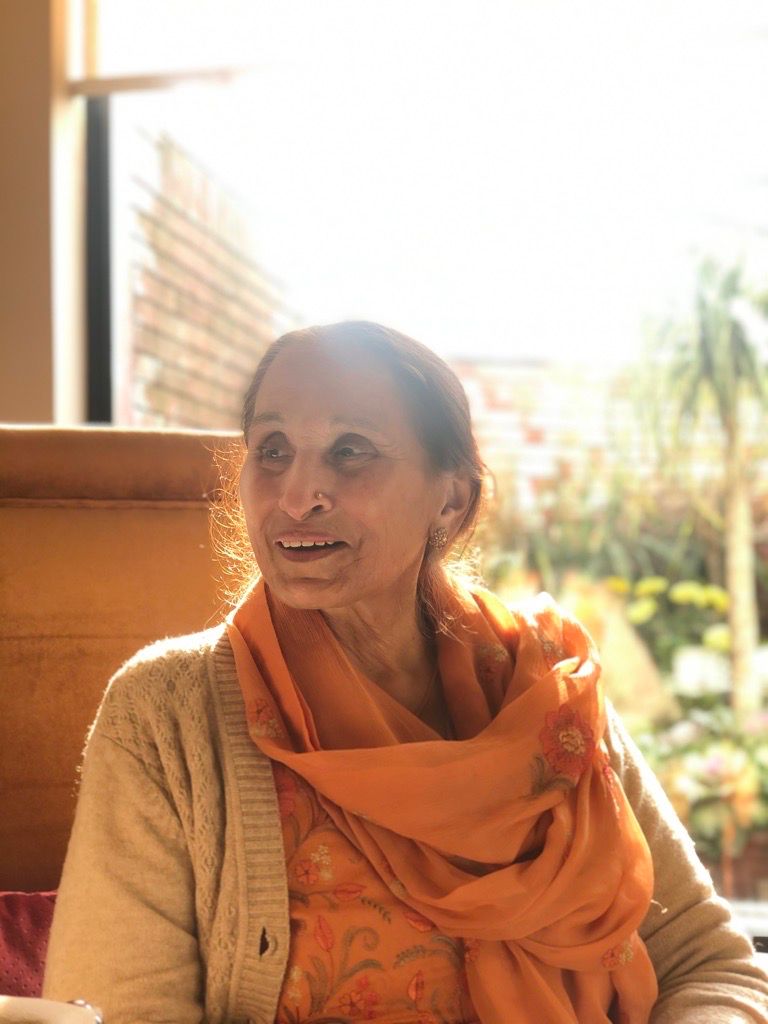
She loved flowers and greenery, and she loved sitting under the winter sun. She loved music. She loved her two sons, and she loved massages and pampering. During her last months, we focused on these factors only.
We took long walks in the colony park in the evenings. She was speaking less and less with each passing day, but I constantly tried to engage her in conversations. I drew her attention to the trees, gently swaying in the breeze. I invited her to enjoy the beautiful colours of the spring flowers. I made sure that she smiled at the children playing their own silly games, and I made sure that she breathed in the fresh air and soaked in the winter sun as much as possible.
We even took a drive when possible, and I took her along to visit her ancestral home. It is not there anymore — replaced with ugly and congested houses. But she found the streets familiar and even recognized the small house she had built herself. And we enjoyed great music on the way. I had compiled a playlist of her favourite songs and held her bony hand while I drove.
I checked the texture of her skin every day and moisturized her when needed. I dressed her bedsores and focused on pampering her and providing her comfort in every way possible.
For the last almost two years, my complete day revolved around my mother. Sometimes, I visited her only for a few minutes, while on most days, I spent the day at her place. But each of my activities was planned around her, and was planned with her in mind. So when she left, I lost the anchor of my life.
For a few days after her death, I was bewildered. My days were aimless. But now, when I visit her grave almost every day, I behave as if she is still alive. I ask if she is feeling well. I inquire if she needs moisturizing or a massage. I share gossip with her. Somehow, this practice has stabilized me to some extent.
My mother finally left us on the 26th day of February this year. I still feel as if I am dreaming a bad dream. I wish I were dreaming. I wish when I wake up, I find my mother awaiting my daily visit. I wish when I wake up, I am able to smell her sweet smell and the comforting warmth of her lap. And I wish, when I wake up, I find an opportunity to apologize to her for all the hurt I have ever caused her. I so wish I were dreaming.
I am not mad or crazy. In my heart, I know she is gone and is silent forever. I never wanted it to be so, but it is so. But I am sure, somewhere beyond the material confines of this world and maybe in another dimension, she is sitting on a rocking chair and reading a book in a small garden. The garden is filled with colourful flowers and hovering butterflies. There is the warmth of an eternal winter sun, and her favourite music is constantly playing by her side.
I wish I were able to join her comforting and loving company soon. I wish we were together once again.
I love you, and I miss you, Mama. Without you, my life will never be the same again.